Mold Infection Prevention and Recovery
As the leaves turn and temperatures cool, most of us look forward to crisp walks, cozy sweaters, and hot drinks. But as a doctor specializing in complementary and functional medicine, I see a distinct seasonal pattern in my practice every autumn: a sudden surge of patients coming through our doors feeling mysteriously exhausted, congested, inflamed, or plagued by brain fog.
While many people attribute their autumn downturn to the seasonal flu, ragweed allergies, or simple fatigue,
the culprit is frequently something far less obvious: mold.
This week, let's look at why autumn is a peak time for mold exposure and infection, and how we can prevent or recover from mold infections.
-Dr. John Salerno
Outsmarting Mold: Essential Steps to Protect Your Home and Health
When we think of mold, we usually picture humid July basements or damp midsummer heat. However, autumn brings a distinct mix of biological and environmental shifts that make it a peak season for mold exposure and systemic illness.
- The Outdoor Leaf-Pile Effect - As trees shed their foliage, layers of leaves blanket lawns, gutters, and forest floors. Beneath those colorful top leaves lies a dark, damp, decomposing environment—an ideal breeding ground for species like Cladosporium, Aspergillus, and Alternaria. Raking leaves, walking through woods, or playing outside with children and pets kicks millions of microscopic mold spores directly into the air.
- The Indoor Heating Shift - When chilly weather arrives, we seal our windows shut and turn on heating systems for the first time in months. HVAC coils, furnaces, and ductwork that sat dormant—and potentially damp—all summer long suddenly begin blowing warm air throughout the house. If mold grew inside your ducts or AC units over the summer, turning on the heat circulates those spores straight into your living space.
- Condensation and Rain - Fall rains, combined with dropping nighttime temperatures, create high indoor humidity and condensation around window frames, basements, and attics. This moisture lets hidden indoor mold colonies thrive undetected.
How Mold Becomes an Internal Infection or Toxicity
When patients come to my office, I often see confusion about what actually happens to the body during mold exposure. People wonder whether they are dealing with a simple allergy, a deep-seated infection, or full-body toxicity. The truth is, it depends on your unique immune health, your genetics, and how long you've been exposed.
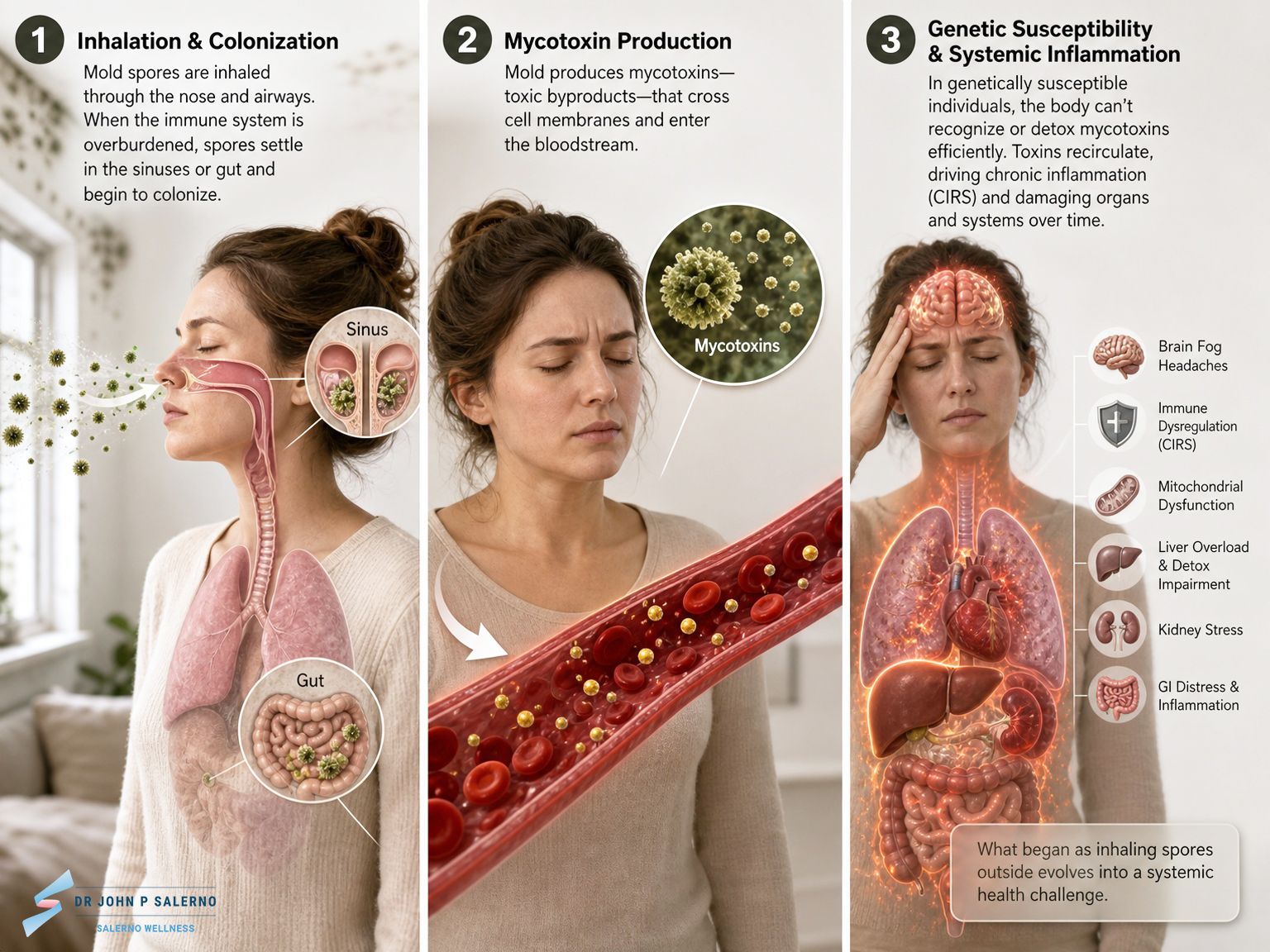
When you inhale microscopic mold spores, a healthy immune system can typically sweep them away. However, if your immune system is already overburdened, those spores can settle into the warm, damp environments of your sinus cavities or gastrointestinal tract, where they take root and begin to colonize.
Once established, mold releases poisonous chemical byproducts known as mycotoxins, which readily cross cellular membranes directly into your bloodstream. For about 25% of the population, a specific genetic variation makes it almost impossible for the body to recognize and detoxify these mycotoxins on its own.
Instead of being safely excreted, the toxins continuously recirculate, trapping your body in a loop of severe, widespread inflammation known as Chronic Inflammatory Response Syndrome (CIRS). Over time, this ongoing toxin load disrupts cellular energy production, burdens your liver and kidneys, and leaves you feeling completely drained—turning what began as simply breathing in spores outdoors into a complex, systemic health challenge.
Symptoms of Mold Exposure and Toxicity
Mold illness is often called "the great imitator" because its symptoms mimic chronic fatigue syndrome, fibromyalgia, Lyme disease, or long COVID. Because mycotoxins impact multiple organ systems, symptoms vary widely:
- Respiratory and Sinus: Persistent sinus congestion, chronic cough, throat irritation, post-nasal drip, or asthma-like shortness of breath
.
- Cognitive and Neurological: Brain fog, difficulty concentrating, memory loss, chronic headaches, light sensitivity, dizziness, or tingling in the extremities.
- Energy and Joints: Profound, persistent fatigue that rest does not relieve, widespread muscle aches, joint stiffness, and morning pain.
- Digestive Issues: Nausea, abdominal pain, bloating, diarrhea, and food sensitivities stemming from digestive issues and gut microbiome disruption.
- Mood and Sleep: Mood swings, heightened anxiety, irritability, depression, and unrefreshing sleep.
Preventative Steps to Take Right Now
Taking proactive steps around your home before mold takes root can save you and your family from months of unnecessary health struggles. Start outside by clearing fallen leaves from your roof gutters so autumn rains drain properly away from your foundation rather than pooling near your living spaces. When managing firewood for chilly nights, keep stacks elevated and store them at least 10 to 15 feet from your house, bringing inside only what you plan to burn right away.
If you know you are sensitive to mold, I always recommend wearing an N95 mask before heading out to rake leaves, turn compost, or handle logs, since these outdoor chores kick up millions of microscopic spores directly into your breathing zone.
Inside your home, a few simple adjustments can make a world of difference. Before you turn on your furnace for the season, have your air ducts inspected and replace standard furnace filters with high-efficiency HEPA filters to capture circulating particles. Keeping indoor relative humidity strictly between 30% and 50% is equally critical—using dehumidifiers in damp basements or crawlspaces helps keep ambient moisture in check.
Finally, make it a daily habit to run exhaust fans in your kitchen and bathrooms during and after use, and leave shower doors or curtains open so air can circulate freely through high-moisture areas.
How We Address Mold Infections at Salerno Wellness
If you are already experiencing symptoms of mold exposure or toxicity, standard over-the-counter allergy medications or nasal sprays only mask the surface. At Salerno Wellness, we focus on identifying and treating the root cause of mold poisoning using a personalized combination of complementary, functional, and integrative treatments.
- Removing the Source and Advanced Testing - The first essential step is to identify exposure and confirm your body's toxic load. We utilize advanced laboratory testing to detect specific urinary mycotoxins and assess systemic inflammatory markers.
- Binders and Detoxification - To remove mycotoxins from the digestive tract and tissues, we may use targeted nutritional supplements and oral binders that trap toxins in the gut so your body can safely excrete them without reabsorbing them.
- Phosphatidylcholine IV Therapy - A cornerstone of our mold protocol at Salerno Wellness is Phosphatidylcholine IV treatments. Phosphatidylcholine is a vital phospholipid that helps repair cell membranes damaged by mycotoxins. Administering it intravenously helps release and clear toxins trapped deep within your tissues and cellular structures while supporting liver function.
- Immune and Systemic Support - Mold toxicity severely strains the body's natural defenses and gut microbiome. Our protocols integrate comprehensive nutritional counseling, gut-repair strategies, and targeted therapies to calm systemic inflammation, restore immune function, and rebalance your metabolic health.
Contact Us If You Suspect Mold
If autumn always triggers an unexplained wave of exhaustion, brain fog, sinus trouble, or joint pain, don't dismiss it as just getting older or a seasonal cold. Mold toxicity is a very real, highly manageable condition when addressed with a targeted functional medicine approach.
If you suspect mold is impacting your health this season, we will help you get answers, clear the toxins, and reclaim your vibrant quality of life.
Please
contact us online or call us at (212) 582-1700 in New York City or (475) 269-2138 in Connecticut to schedule an appointment.
Additional References
- Mold Toxicity - Frequently Misdiagnosed Symptoms From A Cause Hidden in Plain Sight
- Mold Toxicity Treatments by Dr. John Salerno