Long COVID Treatments NYC - Dr. John Salerno

Functional and Integrative Long COVID Recovery Treatments by Salerno Wellness in Manhattan, NY, and Connecticut
For over three decades, I have worked with patients suffering from complicated, chronic symptoms that interfere with daily life. One of the most complicated conditions that I work with is Long COVID. I know how frustrating it can be when your symptoms just don't go away, and no one has answers. I take your concerns seriously and search for answers beyond band-aid solutions. I work to determine the causes of your Long COVID symptoms and help you recover using complementary, functional, and integrative therapies customized for you.
-Dr. John Salerno
What Is Long COVID?
Long COVID, also known as Post-Acute Sequelae of SARS-CoV-2 (SARS-CoV-2) infection, refers to symptoms that persist or develop after the initial COVID-19 infection has resolved. These symptoms can last for weeks, months, or even years, and they may affect multiple systems throughout the body. Long COVID can occur even in individuals who experienced mild or asymptomatic infections. Researchers believe that immune dysregulation, chronic inflammation, viral persistence, and an imbalance in the autonomic nervous system all contribute to this condition.
Many patients experience significant disruptions in daily functioning, including work, exercise, and cognitive performance. Because Long COVID presents differently in each person, it requires a personalized and comprehensive approach to evaluation and treatment. The condition is recognized as a major public health concern, with millions affected worldwide. Early intervention and targeted therapies can improve long-term outcomes and restore quality of life.
Common Long COVID Symptoms
Long COVID affects each patient differently, but many experience a cluster of symptoms that interfere with daily life. These symptoms often fluctuate, making it difficult to identify triggers or manage them. A functional and integrative approach helps identify the underlying imbalances contributing to these persistent issues.
- Chronic Fatigue - Many patients describe a deep exhaustion that does not improve with rest. This fatigue limits physical activity, concentration, and productivity.
- Brain Fog and Cognitive Difficulties - Patients often report trouble focusing, memory lapses, and slowed thinking. These symptoms interfere with work performance and daily responsibilities.
- Shortness of Breath - Lingering respiratory symptoms may persist long after the initial infection. Patients may feel winded with minimal exertion, limiting physical activity.
- Heart Palpitations - Irregular or rapid heartbeats are common and may be related to autonomic dysfunction. These sensations can be alarming and may worsen with stress or activity.
- Joint and Muscle Pain - Many individuals experience widespread aches that resemble inflammatory or autoimmune conditions. These pains may fluctuate and worsen with overexertion.
- Sleep Disturbances - Insomnia, restless sleep, and non-restorative sleep are frequently reported. Poor sleep amplifies fatigue, mood changes, and cognitive symptoms.
- Loss of Taste or Smell - Some patients continue to experience partial or complete loss of these senses. This affects appetite, nutrition, and overall enjoyment of food.
- Digestive Issues - Symptoms such as bloating, nausea, diarrhea, or constipation may persist. These issues often reflect inflammation or microbiome imbalance.
These symptoms can be overwhelming, especially when they appear in combination or shift from day to day, leaving patients unsure of what to expect. Many individuals feel discouraged when symptoms persist despite normal test results or reassurance that everything looks fine. Understanding that these symptoms have real physiological drivers is the first step toward meaningful recovery, and a comprehensive evaluation can reveal the imbalances contributing to them. With the right approach, patients can begin to regain stability, restore function, and move toward long-term improvement.
Long COVID Causes
Long COVID is believed to result from a combination of immune system dysregulation and chronic inflammation triggered by the initial viral infection. Some patients may experience viral persistence, in which viral remnants continue to stimulate the immune system. Others develop imbalances in the autonomic nervous system that lead to palpitations, dizziness, and fatigue.
Mitochondrial dysfunction may reduce the body's ability to produce energy efficiently. Inflammation in the brain and nervous system can contribute to cognitive symptoms and mood changes. Hormonal imbalances may develop due to stress on the endocrine system during and after infection. Gut microbiome disruption is another common factor that influences digestion, immunity, and inflammation. Because Long COVID affects multiple systems, a comprehensive evaluation is essential to identify the root causes in each patient.
Types of Long Covid
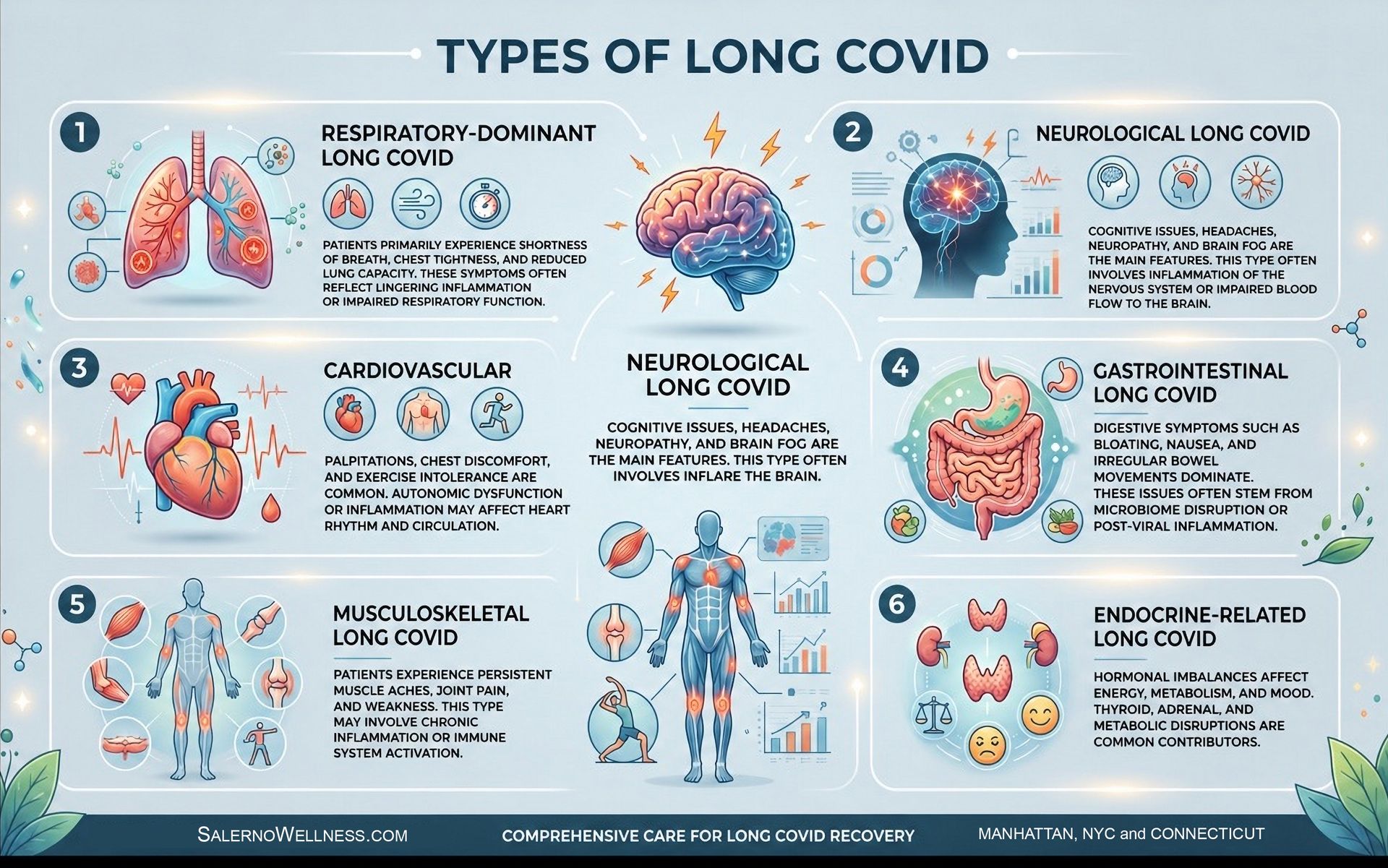
Long COVID can present in several distinct patterns, and understanding these patterns helps explain why symptoms vary so widely from one patient to another. Each type reflects a different area of the body affected by post-viral inflammation, immune imbalance, or autonomic disruption. Identifying the specific pattern a patient is experiencing allows for a more targeted and effective treatment approach that addresses the underlying drivers of their symptoms.
- Respiratory Dominant Long Covid - Patients experience shortness of breath, chest tightness, and reduced lung capacity. These symptoms often reflect lingering inflammation or impaired respiratory function.
- Neurological Long Covid - Cognitive issues, headaches, neuropathy, and brain fog are the main features. This type often involves inflammation of the nervous system.
- Cardiovascular Long Covid - Palpitations, chest discomfort, and exercise intolerance are common. Autonomic dysfunction or inflammation may affect heart rhythm.
- Gastrointestinal Long Covid - Digestive symptoms such as bloating, nausea, and irregular bowel movements dominate. These issues often stem from microbiome disruption.
- Musculoskeletal Long Covid - Patients experience persistent muscle aches, joint pain, and weakness. This type may involve chronic inflammation or immune activation.
- Endocrine Related Long Covid - Hormonal imbalances affect energy, metabolism, and mood. Thyroid, adrenal, and metabolic disruptions are common contributors.
Recognizing these different types of Long Covid helps clarify why patients may experience such diverse and fluctuating symptoms. Many individuals fall into more than one category, which is why a comprehensive evaluation is essential for accurate assessment and treatment planning. By identifying the dominant patterns affecting each patient, it becomes possible to create a personalized strategy that supports recovery across multiple systems. This approach helps patients regain stability, improve daily functioning, and move toward long term healing with greater confidence.
Candidates for Treatment by Dr. John Salerno
Patients who continue to experience symptoms weeks or months after recovering from Covid nineteen are strong candidates for treatment. Individuals who feel dismissed or unheard by conventional providers often benefit from a more comprehensive approach.
Those experiencing chronic fatigue, cognitive difficulties, or unexplained symptoms may find answers through functional testing and targeted therapies. Patients with pre-existing conditions that worsened after COVID-19 are also ideal candidates.
Individuals seeking natural, root-cause-focused treatments often respond well to this approach. Those who want to avoid long-term reliance on medications may benefit from integrative strategies that support healing. Patients who have tried conventional treatments without improvement often experience meaningful progress with personalized care. Anyone looking for a physician who listens, investigates deeply, and treats the whole person may be an excellent fit for this program.
Related Medical Conditions That Can Be Treated by Dr. Salerno
Long COVID often overlaps with or triggers other medical conditions that benefit from functional and integrative treatment. Addressing these related conditions can significantly improve recovery and symptom control. Many patients find that treating interconnected issues accelerates progress and restores quality of life.
- Chronic Fatigue Syndrome - Long COVID can mimic or trigger this condition, leading to profound fatigue and post-exertional malaise. Supporting mitochondrial function and reducing inflammation can help restore energy.
- Dysautonomia (POTS) - or Autonomic dysfunction may cause dizziness, a rapid heart rate, and exercise intolerance. Targeted therapies can help rebalance the nervous system.
- Thyroid Dysfunction - Post-viral inflammation can disrupt thyroid hormone production. Optimizing thyroid function improves metabolism, energy, and cognitive clarity.
- Adrenal Imbalance - Chronic stress from illness can impair adrenal hormone regulation. Supporting adrenal health stabilizes energy, mood, and stress resilience.
- Inflammatory Joint Conditions - Persistent inflammation may lead to joint pain and stiffness. Anti-inflammatory therapies reduce discomfort and improve mobility.
- Gut Dysbiosis - Long COVID often disrupts gut bacteria, contributing to digestive symptoms and immune imbalance. Restoring gut health supports recovery and reduces inflammation.
- Sleep Disorders - Insomnia and disrupted sleep cycles are common after Covid nineteen. Improving sleep quality enhances healing and cognitive function.
These related conditions often overlap in ways that make Long Covid more complex, but they also provide important clues about what is happening beneath the surface. When these interconnected issues are identified and treated together, patients typically experience more consistent improvement and greater symptom stability. Addressing these conditions helps restore balance across multiple systems, reduces the overall inflammatory burden, and supports the body’s ability to recover. This comprehensive approach allows patients to regain function more effectively and move toward long-term healing with greater confidence.
How Conventional Medicine Treats Long COVID
Conventional medicine typically focuses on managing individual symptoms rather than addressing the underlying causes of Long COVID. Patients may be prescribed medications for fatigue, pain, sleep disturbances, or mood changes. Pulmonary rehabilitation may be recommended for respiratory symptoms. Some individuals are referred to specialists depending on their symptoms. While these approaches can provide temporary relief, they often do not resolve the root imbalances driving Long COVID. Many patients report feeling shuffled between specialists without receiving a comprehensive plan. This fragmented approach can leave patients without clear direction.
How Dr. John Salerno Treats Long COVID
My approach begins with a detailed evaluation to uncover the root causes of your symptoms. I use advanced diagnostic testing to assess inflammation, immune function, hormonal balance, nutrient deficiencies, and gut health. Personalized nutritional therapies help reduce inflammation and support cellular repair. Intravenous nutrient therapy may be used to restore energy, strengthen immunity, and improve cognitive function.
Detoxification support helps the body eliminate inflammatory byproducts and restore metabolic balance. Hormonal optimization can improve energy, mood, and resilience. Gut-focused therapies help rebalance the microbiome and reduce digestive symptoms. By combining integrative therapies with evidence-based medical care, I create a comprehensive plan that supports long-term recovery.
Possible Side Effects of Treatment
Most integrative treatments for Long COVID are well tolerated, but some patients may experience mild reactions as their body adjusts. Nutritional therapies may cause temporary changes in digestion. Detoxification support can lead to mild fatigue or headaches. Hormonal therapies may cause temporary shifts in mood or energy. Intravenous therapies may cause minor discomfort at the injection site. Any side effects are monitored closely, and treatment plans are adjusted for comfort and safety.
What Can Happen if Long COVID is Left Untreated
If Long COVID is left untreated, symptoms may persist or worsen over time. Chronic inflammation can lead to long-term fatigue, cognitive impairment, and reduced physical capacity. Untreated autonomic dysfunction may contribute to palpitations, dizziness, and exercise intolerance. Hormonal imbalances may become more pronounced, affecting metabolism and mood. Persistent respiratory symptoms can limit activity and reduce overall fitness.
Digestive issues may escalate, leading to nutrient deficiencies and immune dysfunction. Many patients experience a decline in quality of life. Early intervention can prevent long-term complications and support a more complete recovery.
Patient Case Study
Michael, a forty-five-year-old man, came to my office nine months after recovering from COVID-19. He reported severe fatigue, brain fog, and difficulty exercising, which affected his work and daily life. He had seen multiple specialists but still had no clear explanation for his symptoms. During his evaluation, we identified inflammation, hormonal imbalance, and gut dysbiosis. I created a personalized treatment plan that included nutritional therapy, targeted supplements, and intravenous nutrient support.
Within six weeks, he noticed improvements in energy and cognitive clarity. His digestive symptoms began to resolve, and he experienced fewer episodes of shortness of breath. Over the next several months, his stamina improved significantly. He returned to regular exercise and regained confidence in his health. By six months, he reported feeling like himself again. His case demonstrates the value of a comprehensive, root-cause-focused approach to Long COVID recovery.
Why Patients Choose Dr. John Salerno
Patients choose me because I take the time to listen and understand their experiences. My integrative approach focuses on identifying the root causes of symptoms rather than masking them. With more than thirty years of experience, I have helped thousands of patients navigate complex conditions. I use advanced diagnostic testing to uncover imbalances that conventional medicine may overlook.
My treatment plans are personalized and designed to support long-term healing. Patients appreciate the combination of medical expertise and natural therapies. I prioritize patient education so individuals feel informed and empowered. My goal is always to help patients regain control of their health.
Long COVID FAQs
Did I get Long COVID because I took the vaccine? - Current research shows that COVID-19 vaccines do not cause Long COVID, and large studies indicate that vaccinated individuals are actually less likely to develop Long COVID after infection. Some people may experience short-term immune‑related symptoms after vaccination, but these resolve quickly and are not the same as persistent post‑viral illness. Long COVID develops from the body's response to the virus itself, not from the vaccine.
What is the difference between Long COVID and COVID‑19? - COVID‑19 is the acute viral infection caused by SARS‑CoV‑2, producing short‑term symptoms such as fever, cough, and congestion. Long COVID refers to symptoms that continue or appear weeks or months after the initial infection has resolved, often involving fatigue, cognitive issues, or autonomic changes. In other words, COVID‑19 is the immediate illness, while Long COVID is the prolonged post‑viral condition that can follow it.
Why does it seem like the traditional medical community is not interested in treating my Long COVID? - Many patients feel overlooked because traditional medicine often focuses on acute illness, and Long COVID does not fit neatly into standard diagnostic categories. The condition involves multiple systems and requires time‑intensive evaluation, which can be difficult to address in brief, symptom‑based visits. As research continues to evolve, many patients seek more comprehensive and integrative care to understand the root causes of their ongoing symptoms.
Why do my Long COVID symptoms come and go? - Long COVID symptoms often fluctuate because the condition affects multiple systems that respond differently to stress, activity, and inflammation. Many patients notice that symptoms worsen after physical or mental exertion, poor sleep, or illness. These ups and downs are common and do not mean recovery is impossible.
Can Long COVID develop even if my initial infection was mild? - Yes, many people with Long COVID had mild or even asymptomatic initial infections. The severity of the acute illness does not predict who will develop lingering symptoms. Long COVID is driven by the body's post-viral response, not the intensity of the original infection.

Contact Dr. John Salerno for a Consultation on Long COVID Treatments in Manhattan, NY, and Connecticut
Long COVID is a complex condition that requires a thoughtful and personalized approach. Many patients struggle for months without answers, but you do not have to navigate this alone. My integrative and functional approach focuses on uncovering the root causes of your symptoms. With targeted therapies and individualized care, meaningful recovery is possible. If you are experiencing persistent symptoms after COVID-19, I encourage you to take the next step toward healing.
My team and I are here to support you with compassionate, evidence-based care. Contact Salerno Wellness today to schedule a consultation. Together, we can create a path toward renewed health and vitality.
Please contact us today.
Additional References
Long COVID or Post-COVID Conditions - Centers for Disease Control and Prevention
Immune and hormonal features of Long COVID - National Institutes of Health