Fatty Liver Disease Treatments NYC - Dr. John Salerno

Functional, Nutritional, and Hormonal Strategies for Improving Liver Health in New York City and Connecticut
Fatty liver disease has become increasingly common, and many patients are surprised to learn how strongly it affects their energy, metabolism, and long‑term wellness. If you've been struggling with fatigue, weight changes, or abnormal liver markers, I want you to know that these issues are often reversible with the right evaluation and treatment. At Salerno Wellness, I look beyond surface‑level symptoms to identify the metabolic, nutritional, and hormonal factors contributing to liver dysfunction. My goal is to help you restore liver health, improve metabolic stability, and regain the energy you need to feel your best. With proper care, most patients experience meaningful improvement.
-Dr. John Salerno
What Is Fatty Liver Disease and How It Affects the Body
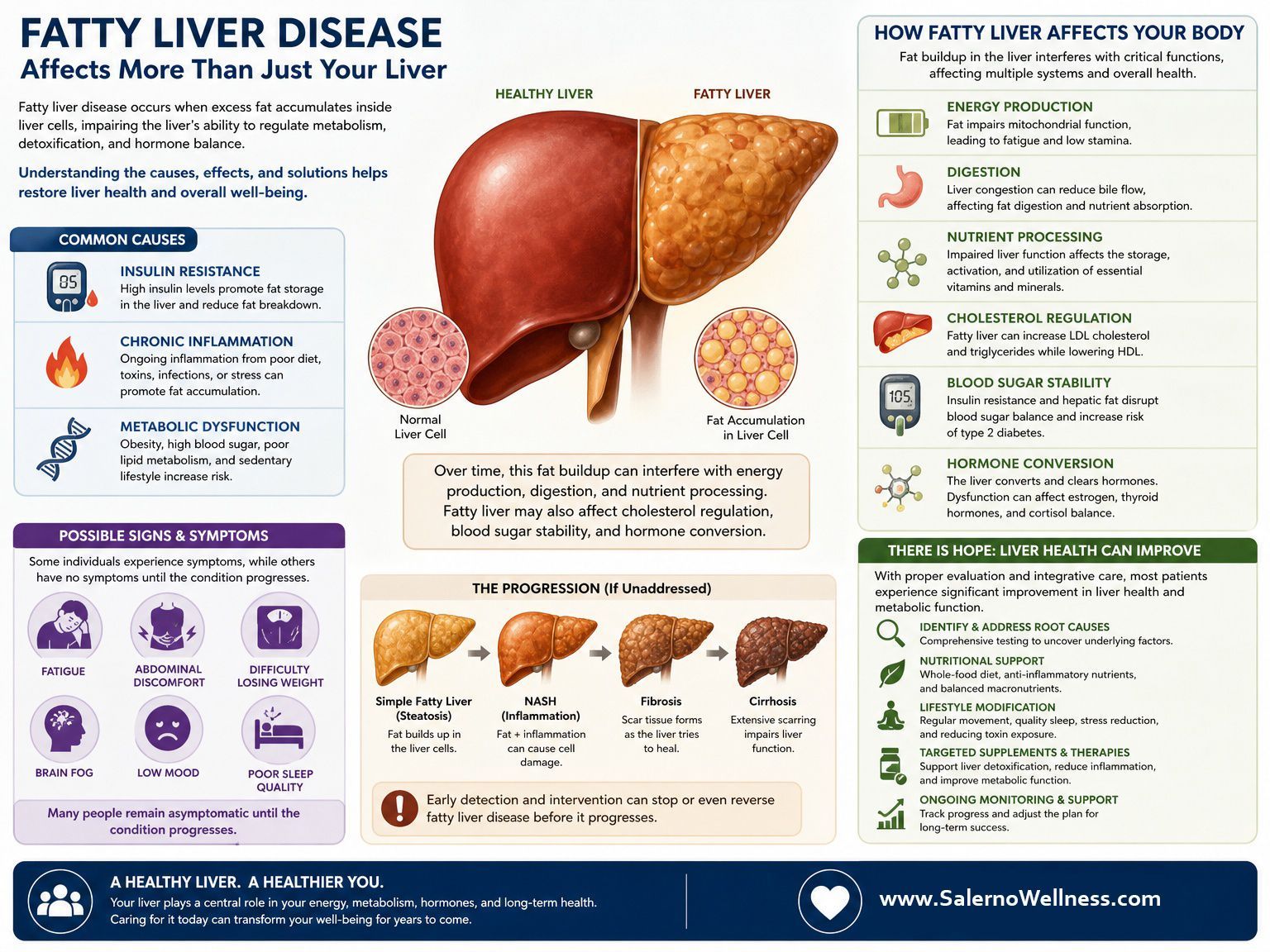
Fatty liver disease occurs when excess fat accumulates inside liver cells, impairing the liver's ability to regulate metabolism, detoxification, and hormone balance. Many people develop fatty liver because of insulin resistance, chronic inflammation, or metabolic dysfunction. Over time, this fat buildup can interfere with energy production, digestion, and nutrient processing. Fatty liver may also affect cholesterol regulation, blood sugar stability, and hormone conversion. Some individuals experience fatigue, abdominal discomfort, or difficulty losing weight, while others remain asymptomatic until the condition progresses. Understanding how fatty liver disease affects multiple systems helps guide effective treatment. With proper evaluation and integrative care, most patients experience significant improvement in liver health and metabolic function.
Common Symptoms of Fatty Liver Disease
Fatty liver disease often develops quietly, with subtle signs like persistent fatigue, mild abdominal discomfort, or unexpected weight changes that are easily overlooked in early stages. As the condition progresses, metabolic disruption and liver inflammation can lead to more noticeable issues, including insulin resistance, digestive changes, and elevated liver enzymes. A comprehensive medical evaluation is essential to identify these underlying factors early and implement an effective integrative plan to restore liver health.
- Fatigue – Many individuals experience reduced energy due to impaired liver metabolism and inflammation.
- Abdominal discomfort – Some patients report fullness or mild pain in the upper right abdomen.
- Difficulty losing weight – Metabolic dysfunction may make weight loss challenging despite lifestyle changes.
- Elevated liver enzymes – Routine bloodwork may reveal abnormal liver markers.
- Hormonal imbalance – Fatty liver may disrupt hormone conversion and regulation.
- Insulin resistance – Blood sugar instability may develop due to impaired liver function.
- Digestive changes – Bloating or irregular digestion may occur as liver metabolism slows.
Because these symptoms often overlap with other metabolic conditions, a thorough medical evaluation is vital to establish an accurate diagnosis. A comprehensive assessment helps healthcare providers identify the root cause of systemic issues like liver dysfunction, insulin resistance, and hormonal disruption. By clearly identifying these contributing factors early, clinicians can design a targeted integrative treatment plan that addresses metabolic health from every angle.
Causes of Fatty Liver Disease
Fatty liver disease often develops due to a combination of metabolic, dietary, and hormonal factors. Insulin resistance is a common driver, causing the liver to convert excess glucose into fat. Chronic inflammation may further impair liver function and increase fat accumulation. Nutrient deficiencies, environmental exposure, and poor detoxification may contribute to metabolic instability.
Hormonal imbalance, including thyroid dysfunction or cortisol irregularities, may also influence liver health. Some individuals develop fatty liver due to genetics or long‑term medication use. Understanding these underlying factors helps guide targeted treatment that supports long‑term recovery.
Related Conditions That Often Overlap with Fatty Liver Disease
Fatty liver disease rarely occurs in isolation and is frequently interconnected with broader systemic health issues. Because the liver plays a central role in regulating metabolism and hormones, dysfunction in this organ can both cause and result from other underlying disorders. Understanding these overlapping conditions is essential to identify the true root causes of your symptoms and achieve lasting recovery.
- Insulin resistance – Blood sugar instability may contribute to fat accumulation in the liver.
- Metabolic syndrome – Elevated triglycerides, abdominal weight gain, and blood pressure changes may accompany fatty liver.
- Thyroid dysfunction – Low thyroid activity may slow metabolism and increase fat storage.
- Cortisol imbalance – Chronic stress may disrupt liver metabolism and increase inflammation.
- Gut dysbiosis – Imbalanced gut bacteria may contribute to inflammation and metabolic instability.
- Obesity – Excess weight may increase fat accumulation in the liver.
Evaluating and addressing these interconnected conditions is vital to a successful, long-term treatment strategy. By looking at how these metabolic and hormonal factors influence one another, healthcare providers can build a truly comprehensive care plan. Taking this holistic approach ensures that every contributing factor is targeted, leading to more effective liver restoration and better overall wellness.
Types of Fatty Liver Disease
Fatty liver disease manifests in several distinct forms, each driven by different underlying physiological mechanisms. Accurately identifying the specific variation affecting your system is critical for developing a truly effective recovery plan. Distinguishing between these subtypes allows care to be tailored directly to the primary drivers of your liver dysfunction.
- Non‑alcoholic fatty liver disease – Fat accumulation develops due to metabolic dysfunction rather than alcohol use.
- Non‑alcoholic steatohepatitis – Inflammation accompanies fat buildup and may increase long‑term risk.
- Alcohol‑related fatty liver – Excessive alcohol intake may impair liver metabolism and increase fat storage.
- Metabolic fatty liver – Insulin resistance and hormonal imbalance drive fat accumulation.
- Inflammatory fatty liver – Chronic inflammation contributes to liver dysfunction.
Determining the exact presentation of fatty liver disease eliminates guesswork and streamlines your path to recovery. Once we identify the root cause and level of inflammation, we can implement targeted clinical strategies to address your body's unique needs. This precise approach ensures more efficient liver restoration and long-term protection against further metabolic stress.
Candidates for Fatty Liver Disease Treatment by Dr. Salerno
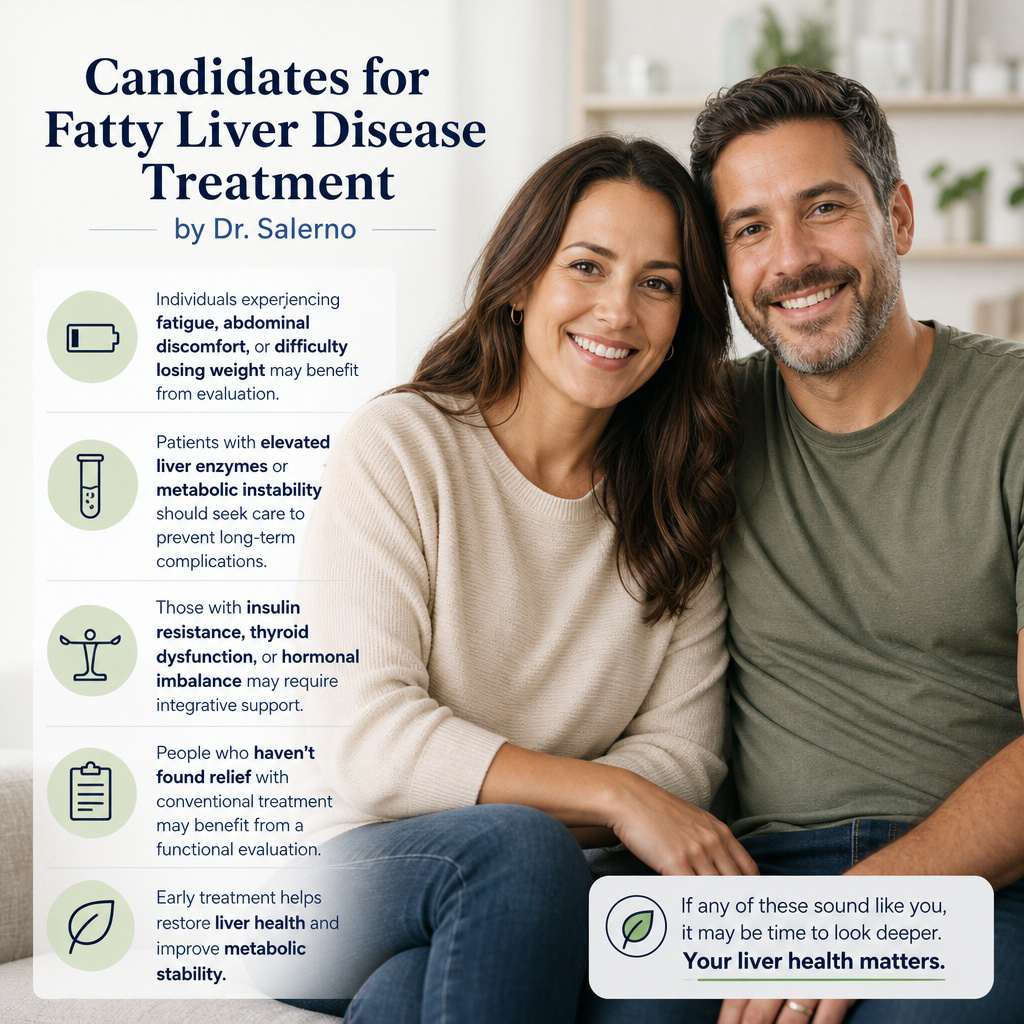
Individuals experiencing fatigue, abdominal discomfort, or difficulty losing weight may benefit from evaluation. Patients with elevated liver enzymes or metabolic instability should seek care to prevent long‑term complications. Those with insulin resistance, thyroid dysfunction, or hormonal imbalance may require integrative support.
People who haven't found relief with conventional treatment. Early treatment helps restore liver health and improve metabolic stability. By identifying individual risk factors and systemic root causes, patients receive a personalized therapeutic plan designed for sustainable recovery. Taking a proactive approach to your liver health today can significantly reduce the risk of progressive organ damage later.
How Conventional Medicine Treats Fatty Liver Disease
Conventional treatment often focuses on lifestyle changes, weight loss, and monitoring liver enzymes. Patients may receive general dietary recommendations or medication to manage blood sugar or cholesterol. While these strategies can be helpful, they may not address underlying metabolic, hormonal, or inflammatory factors. Many individuals require a more comprehensive approach that evaluates nutrient status, gut health, hormone balance, and metabolic function. Long‑term monitoring helps prevent progression and supports improved liver health.
How Dr. Salerno Treats Fatty Liver Disease
Fatty liver disease requires a combination of metabolic, nutritional, hormonal, and detoxification‑focused therapies. Each modality below supports a different aspect of liver repair, inflammation reduction, or metabolic stabilization. These treatments are selected based on laboratory findings, clinical presentation, and the underlying drivers contributing to liver dysfunction. By combining targeted therapies with functional evaluation, Dr. Salerno addresses the root causes of fatty liver rather than treating symptoms alone.
Each modality plays a specific role in improving liver health, reducing inflammation, and restoring metabolic balance. Patients often benefit from a combination of these therapies, depending on the severity of their condition and the presence of related metabolic or hormonal issues. The goal is to support liver repair, improve energy production, and stabilize long‑term metabolic function.
- IV Nutrient Therapy – Supports detoxification pathways, reduces inflammation, and provides targeted nutrients required for liver repair. This therapy helps replenish antioxidants, improve cellular energy production, and stabilize metabolic function. Patients with nutrient deficiencies or chronic inflammation often experience improved energy and reduced liver stress.
- Chelation Therapy – Useful when heavy metals or environmental toxins contribute to liver inflammation or metabolic dysfunction. Chelation helps reduce toxic burden, improve detoxification efficiency, and support healthier liver metabolism. Consider this therapy when laboratory testing reveals toxin‑related contributors to fatty liver.
- Bioidentical Hormone Replacement Therapy – Supports thyroid, adrenal, and metabolic balance, all of which influence liver function. Hormonal imbalance can slow metabolism, increase fat storage, and worsen inflammation. BHRT helps restore hormonal stability and improve metabolic performance.
- Clinical Peptide Therapy – Supports metabolic repair, reduces inflammation, and enhances liver cellular signaling. Certain peptides help improve insulin sensitivity, reduce oxidative stress, and support tissue recovery. This therapy is selected based on metabolic needs and laboratory findings.
- GLP‑1 Therapy – Directly improves insulin resistance and supports healthy weight loss, two core drivers of fatty liver disease. GLP‑1 therapy helps stabilize blood sugar, reduce appetite, and improve metabolic flexibility. Patients with insulin resistance often experience significant improvement in liver markers.
- Longevity Medicine – Provides targeted metabolic optimization, detoxification support, and inflammation reduction. This approach focuses on long‑term liver health, cellular repair, and metabolic stability. Patients benefit from personalized nutritional strategies and advanced metabolic evaluation.
- Red Light Therapy – Supports reduced inflammation and improved cellular energy production. This therapy may help reduce oxidative stress and support liver recovery in patients with chronic inflammation.
- Stem Cell Therapy – Supports regenerative repair in advanced inflammatory liver cases. Stem cell therapy may help improve tissue recovery, reduce inflammation, and support long‑term liver health when conventional approaches are insufficient.
These modalities work together to address the metabolic, hormonal, and inflammatory factors that contribute to fatty liver disease. By combining targeted therapies with comprehensive diagnostic evaluation, Dr. Salerno can treat the underlying drivers of liver dysfunction rather than focusing on symptoms alone. Each patient receives a personalized plan based on laboratory findings, clinical presentation, and long‑term wellness goals.
This integrative approach supports liver repair, improves metabolic stability, and enhances overall energy and vitality. With consistent monitoring and individualized adjustments, most patients experience meaningful improvement in liver markers and metabolic health.
Possible Side Effects of Treatment
Some individuals may experience temporary digestive changes as nutritional protocols begin. Others may notice mild fatigue as metabolic systems adjust. IV nutrient therapy may cause minor soreness at the injection site. Diet or lifestyle adjustments may take time to integrate. Most side effects are mild and improve as treatment progresses. Regular monitoring helps ensure safe, effective care. Long‑term treatment is generally well tolerated and supports improved liver health.
What Can Happen if Fatty Liver Disease Is Left Untreated
Untreated fatty liver disease can lead to significant long‑term complications. Fat accumulation may progress to inflammation, increasing the risk of non‑alcoholic steatohepatitis. Chronic inflammation may impair liver function and contribute to metabolic instability. Insulin resistance may worsen, increasing the risk of diabetes. Hormonal imbalance may intensify, affecting energy, weight, and mood. Long‑term fatty liver disease may increase the risk of fibrosis or cirrhosis. Early treatment helps prevent these complications and supports improved metabolic health.
Patient Case Study
Margaret, a 51‑year‑old patient, came to my office after years of fatigue, abdominal discomfort, and difficulty losing weight. Routine bloodwork revealed elevated liver enzymes, and her primary care physician suspected fatty liver disease. During her evaluation, we discovered insulin resistance, nutrient deficiencies, and underlying inflammation. Further testing revealed thyroid imbalance and gut dysbiosis. We began a treatment plan that included IV nutrient therapy, metabolic support, targeted nutritional protocols, and hormone optimization.
Within weeks, her energy improved, and her digestive symptoms stabilized. Over the next several months, her liver enzymes normalized, and her metabolic function strengthened. Today, Margaret maintains balanced health with ongoing monitoring. Her case highlights the importance of comprehensive evaluation and integrative care for fatty liver disease.
Why Patients Trust Dr. Salerno
Patients trust my practice because I take time to evaluate their full metabolic and hormonal health. I listen carefully to each patient's concerns and use advanced testing to identify the root cause of their symptoms. My approach combines conventional medical expertise with functional and nutritional strategies that support long‑term wellness. I prioritize patient education so individuals feel empowered throughout their treatment. Many patients appreciate the balance of evidence‑based medicine and integrative support. My goal is to help every patient restore metabolic stability and improve their quality of life.
Patient Fatty Liver FAQs
- Can fatty liver disease improve with treatment? Yes, most patients experience significant improvement with proper evaluation and integrative care.
- Can fatty liver disease affect hormone balance? Fat accumulation may disrupt hormone conversion and regulation.
- Can IV nutrient therapy support liver health? IV therapy may help reduce inflammation and support detoxification.
- Will I need long‑term monitoring? Regular evaluation helps ensure stable improvement and prevents progression.
- Can fatty liver disease develop without symptoms? Yes, many individuals remain asymptomatic until the condition progresses.

Contact Dr. John Salerno For A Consultation on Fatty Liver Treatments in Manhattan, NY, and Connecticut
Fatty liver disease is a metabolic condition that requires comprehensive evaluation and targeted treatment. Early intervention helps prevent long‑term complications and supports improved liver health. My integrative approach focuses on identifying the underlying drivers of fatty liver disease and creating a personalized plan that supports lasting wellness.
If you are experiencing fatigue, abdominal discomfort, or metabolic instability, I encourage you to seek a comprehensive evaluation. Contact Salerno Wellness to schedule a consultation and begin your path toward restored metabolic health. I look forward to helping you regain control of your wellness.
Please contact us today.
Additional References
- Fatty Liver Disease - National Institute of Diabetes and Digestive and Kidney Diseases
- Steatotic (Fatty) Liver Disease - American Liver Foundation