What Did You Breathe Yesterday? The Answer May Surprise You

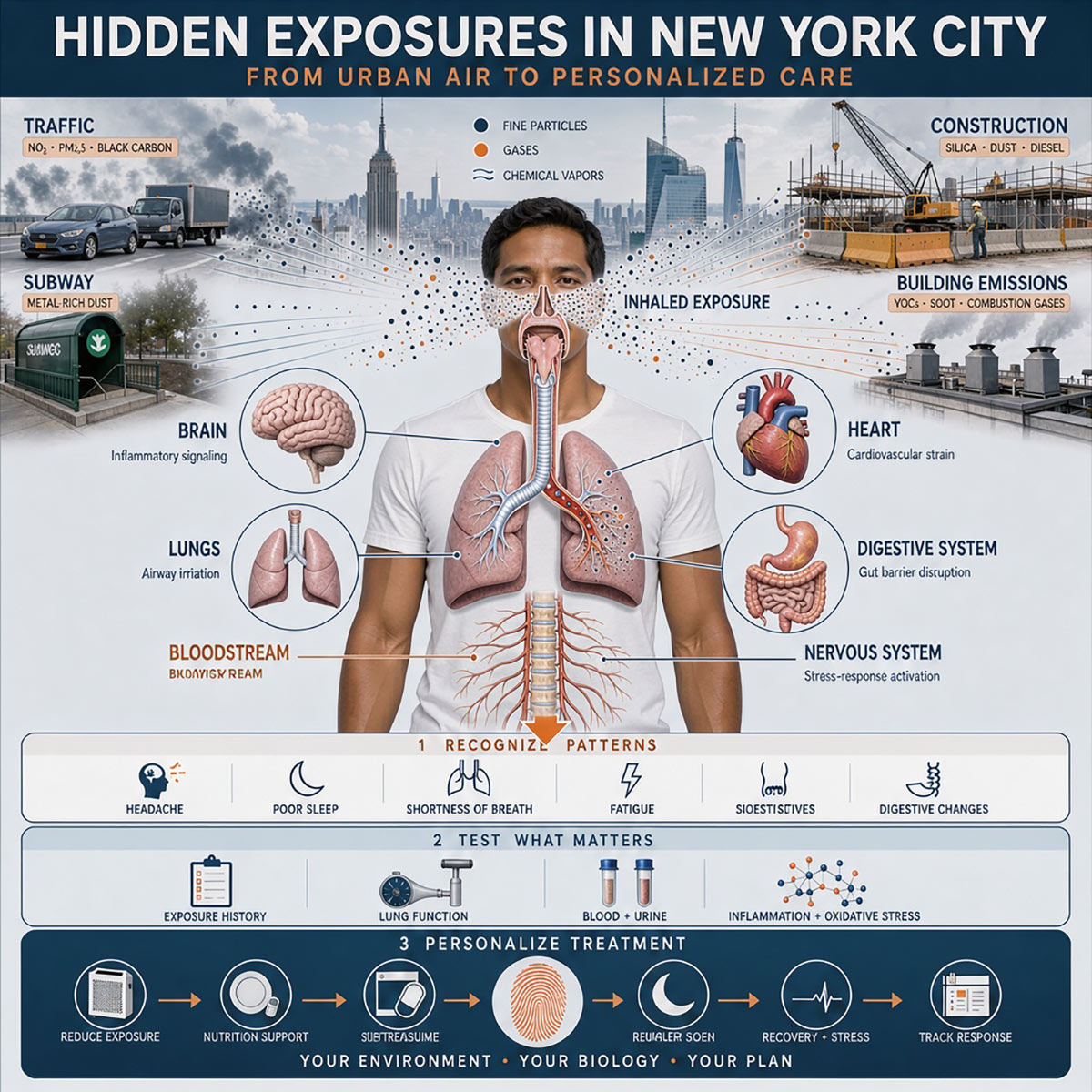
We rarely think about the air we breathe until something makes it impossible to ignore. But in New York City, every breath may carry microscopic particles from traffic, construction, building emissions, subway systems, and other sources, adding to our daily environmental exposure.
What concerns me is not simply what these contaminants may do to the lungs, but how exposure may affect our overall health. When patients experience unexplained fatigue, brain fog, headaches, breathing problems, or simply don't feel like themselves, the environment is a factor worth investigating. This week, let's take a closer look at something we can't even see - the air we breathe.
-Dr. John Salerno
The Hidden Exposures in the Air Around Us
Living, working, and visiting New York City means moving through one of the world's busiest urban environments, and the air around us reflects that activity. Cars, trucks, buses, construction, building emissions, and crowded streets all contribute to what we breathe every day. Then we head underground, where millions of commuters spend part of their day traveling through the subway system.
From the morning commute to a walk down a busy avenue, our surroundings and the air we breathe are constantly changing. Most of us never notice because much of what is in the air is too small to see. But just because we can't see it doesn't mean we shouldn't be asking what's there.
Many of these symptoms can also be caused by other medical conditions, which is why I don't believe in guessing. Advanced testing gives us the information we need to look deeper, identify what may be contributing to your symptoms, and determine the appropriate next step.
Air pollution is especially concerning because many of the substances around us are invisible. Depending on where we live, work, commute, and spend our time, we may encounter microscopic particles, metals, gases, and combustion byproducts without realizing it. Symptoms of significant exposure can also look ordinary, making them easy to dismiss as stress, lack of sleep, aging, or a busy lifestyle.
- Lead - Can be present in contaminated dust from older paint and buildings, demolition and renovation work, construction materials, and certain industrial environments. Excessive exposure may cause fatigue, headaches, abdominal discomfort, difficulty concentrating, memory problems, muscle weakness, and neurological changes.
- Mercury - Exposure can occur in certain industrial and occupational environments, through contaminated foods, and from products containing mercury. Excessive exposure may cause tremors, headaches, muscle weakness, difficulty concentrating, memory problems, mood or behavior changes, coordination problems, and cognitive function issues.
- Cadmium - Can come from cigarette smoke, metal processing, batteries, industrial emissions, and other combustion sources. Significant exposure can damage the lungs and kidneys and may cause coughing, shortness of breath, chest irritation, weakness, and chronic fatigue.
- Arsenic - Exposure can occur through contaminated water and food as well as certain industrial, agricultural, and occupational environments. Significant exposure may cause digestive issues, nausea, abdominal pain, diarrhea, weakness, numbness or tingling in the hands and feet, skin changes, and neurological problems.
- Manganese - Can become airborne as dust or fumes in certain industrial and occupational settings. Excessive or prolonged inhalation may affect the brain and nervous system, potentially causing tremors, slowed or clumsy movements, difficulty with balance and coordination, changes in mood or behavior, and chronic brain fog.
- Fine Particulate Matter (PM2.5) - These microscopic particles can come from vehicle exhaust, fuel combustion, building heating, smoke, construction, and other urban sources. Because they can travel deep into the lungs, exposure may contribute to coughing, airway irritation, difficulty breathing, worsening asthma, decreased lung function, irregular heartbeat, cardiovascular problems, and COPD.
- Nitrogen Dioxide - Produced primarily when fuels are burned, making traffic, trucks, buses, power generation, and building heating potential sources. Higher exposure can irritate the airways and may cause coughing, wheezing, shortness of breath, and worsening asthma or other respiratory conditions.
- Carbon Monoxide - Produced when fuels don't burn completely; it can come from vehicles, boilers, furnaces, generators, and other combustion sources. Exposure may cause headache, dizziness, weakness, nausea, confusion, chest discomfort, and unusual fatigue. High concentrations can become a medical emergency.
- Ozone - Ground-level ozone forms when pollutants from vehicles, power plants, industrial facilities, and other sources react in sunlight. Exposure can cause coughing, throat and lung irritation, pain when taking a deep breath, wheezing, and difficulty breathing during exercise or outdoor activity.
- Volatile Organic Compounds (VOCs) - This broad group of chemicals can be released by fuels, solvents, paints, adhesives, cleaning products, building materials, and other products. Depending on the chemical and exposure level, symptoms may include headaches, dizziness, nausea, eye or throat irritation, and breathing discomfort.
The important point is not to assume that fatigue, brain fog, headaches, digestive problems, or breathing difficulties mean environmental exposure is the cause. Many medical conditions can produce the same symptoms. But when symptoms persist without a clear explanation, where a person lives, works, and spends each day becomes another important part of the medical investigation.
How Do We Know What Toxins You've Been Exposed To?
Because many symptoms of environmental exposure overlap with other medical conditions, Dr. Salerno uses advanced testing to help determine what may be happening inside the body. The specific tests selected depend on the patient's symptoms, medical history, lifestyle, and possible sources of exposure.
- Heavy Metal Challenge Test - The Heavy Metal Challenge Test can help identify elevated levels of heavy metals such as lead, mercury, cadmium, and arsenic. This is particularly important when symptoms such as fatigue, brain fog, headaches, weakness, or difficulty concentrating have no clear explanation.
- Urine Total Toxicity Test - The Urine Total Toxicity Test provides a broader look at potential environmental exposures by evaluating substances being eliminated through the urine. It can provide additional information when Dr. Salerno suspects that environmental factors may be contributing to a patient's symptoms.
- Pulmonary Function Testing - When coughing, wheezing, shortness of breath, chest discomfort, or reduced stamina are present, Pulmonary Function Testing can help evaluate how well the lungs are functioning. This can be particularly useful when a patient has a history of significant exposure to traffic pollution, smoke, particulate matter, or other airborne irritants.
- Nutritional, Metabolic, and Hormonal Testing - Fatigue, brain fog, headaches, poor sleep, weakness, digestive problems, and changes in weight or energy can have many causes unrelated to environmental exposure. Dr. Salerno can use nutritional, metabolic, and hormone testing to identify other underlying problems that may cause similar symptoms.
The goal is to eliminate the guesswork. Once Dr. Salerno has a clearer picture of what a patient has been exposed to and what is happening inside the body, treatment can be matched to the actual findings.
From Advanced Testing to Advanced Treatment
Once Dr. Salerno understands what is happening, treatment can be personalized to address the findings rather than just treating symptoms. Depending on the results, a treatment plan may include:
- Chelation Therapy - When testing identifies clinically significant heavy metal exposure, chelation therapy may be considered to help remove certain metals from the body. Treatment is based on the specific findings and the individual patient.
- Nutritional and Metabolic Support - Nutritional deficiencies and metabolic imbalances can contribute to fatigue, brain fog, weakness, and other symptoms that may initially resemble environmental exposure. Correcting these underlying problems can become an important part of restoring overall health.
- IV Nutrient Therapy - Personalized IV therapy may be used when appropriate to provide targeted vitamins, minerals, and nutrients based on the patient's individual needs. It can become part of a broader treatment plan when testing identifies nutritional or metabolic concerns.
- Hormonal Treatment - Hormonal imbalances may also cause fatigue, weight changes, poor sleep, mood changes, and difficulty concentrating. When testing identifies a hormonal problem, treatment can be directed toward restoring healthier hormonal function.
- Immune Support - When testing and evaluation reveal immune or inflammatory concerns, treatment can focus on supporting healthier immune function and addressing contributing factors. This is especially important when persistent symptoms involve more than one body system.
- Digestive Treatment - Digestive problems can interfere with nutrition and may occur alongside fatigue, inflammation, and other health concerns. When digestive issues are identified, Dr. Salerno can incorporate appropriate treatment into the patient's overall plan.
- Lifestyle Changes - Sleep, nutrition, exercise, stress, environmental exposure, and daily habits can all influence how a patient feels. Personalized lifestyle recommendations can help reduce avoidable exposures while supporting the other treatments being used.
The goal is not simply to remove something harmful from the body. It is to use testing results to identify and address underlying problems that may be affecting the patient's health.
Take a Closer Look at Your Health
We cannot control everything in the air we breathe, but we can pay attention to what our bodies may be telling us. Persistent fatigue, brain fog, headaches, breathing difficulties, digestive problems, or simply not feeling like yourself should not automatically become your new normal.
Even when environmental exposure isn't the cause, advanced testing may uncover nutritional, metabolic, hormonal, or other health concerns worth addressing. That is also why our Annual Holistic Physical can be so valuable: It gives Dr. Salerno an opportunity to look beyond a routine checkup and develop a more complete picture of your health.
If you are experiencing unexplained symptoms, or simply want to take a more proactive approach to your health, schedule an evaluation or Annual Holistic Physical with Dr. Salerno at Salerno Wellness. Unlike the conventional medical community, we don't treat symptoms; we find out why they're happening in the first place.
Please contact us online or call us at (212) 582-1700 in New York City or (475) 269-2138 in Connecticut to schedule an appointment.