
Obesity Treatment NYC - Dr. John Salerno

Obesity Weight Loss Care and Management by Salerno Wellness in Manhattan, NY and Connecticut
Obesity is a complex medical condition that affects metabolism, hormones, inflammation, and long‑term wellness. Many individuals struggle with weight gain despite diet and exercise, often due to underlying metabolic or hormonal factors that conventional approaches overlook. At Salerno Wellness, I evaluate obesity through a functional and nutritional lens to identify drivers of weight‑loss resistance. My goal is to help patients achieve sustainable weight reduction, improved metabolic stability, and better overall health through physician‑led, personalized care. With proper evaluation and targeted treatment, most patients experience meaningful improvement in energy, weight, and long‑term wellness.
-Dr. John Salerno
What Obesity Is and How It Affects the Body
Obesity is defined as excess body fat that disrupts metabolic function, hormonal balance, and cardiovascular health. It often develops due to insulin resistance, chronic inflammation, hormonal imbalance, or genetic predisposition. Excess weight may affect blood pressure, cholesterol, liver function, and blood sugar regulation. Many individuals experience fatigue, cravings, joint discomfort, or difficulty losing weight. Others may notice elevated triglycerides, abnormal fasting glucose, or increased abdominal fat. Understanding how obesity affects multiple systems helps guide effective treatment. With proper evaluation and integrative care, most patients experience improved metabolic stability and long‑term weight control.
Common Symptoms of Obesity
Obesity can show up in various ways, often with subtle systemic signs beyond visible weight changes. Recognizing these physical and metabolic signals early is crucial for identifying underlying health issues before they lead to long-term complications.
- Progressive Body Weight Gain – Unintended or continuous increase in body weight, particularly around the midsection, that resists standard caloric restrictions.
- Chronic Fatigue – Reduced energy may develop due to metabolic dysfunction.
- Abdominal weight gain – Increased visceral fat may indicate insulin resistance.
- Joint discomfort – Excess weight may contribute to musculoskeletal strain.
- Blood sugar instability – Insulin resistance may cause cravings or crashes.
- Elevated blood pressure – Weight gain may affect cardiovascular stability.
- Abnormal cholesterol – Elevated triglycerides or low HDL may indicate metabolic imbalance.
- Difficulty losing weight – Hormonal or metabolic factors may make weight loss challenging.
Because these indicators frequently coexist with complex endocrine and cardiovascular issues, a cookie-cutter approach is rarely effective. A comprehensive diagnostic evaluation lets us target the true underlying drivers, such as cellular inflammation or hormone dysfunction, and build a targeted, long-term recovery strategy.
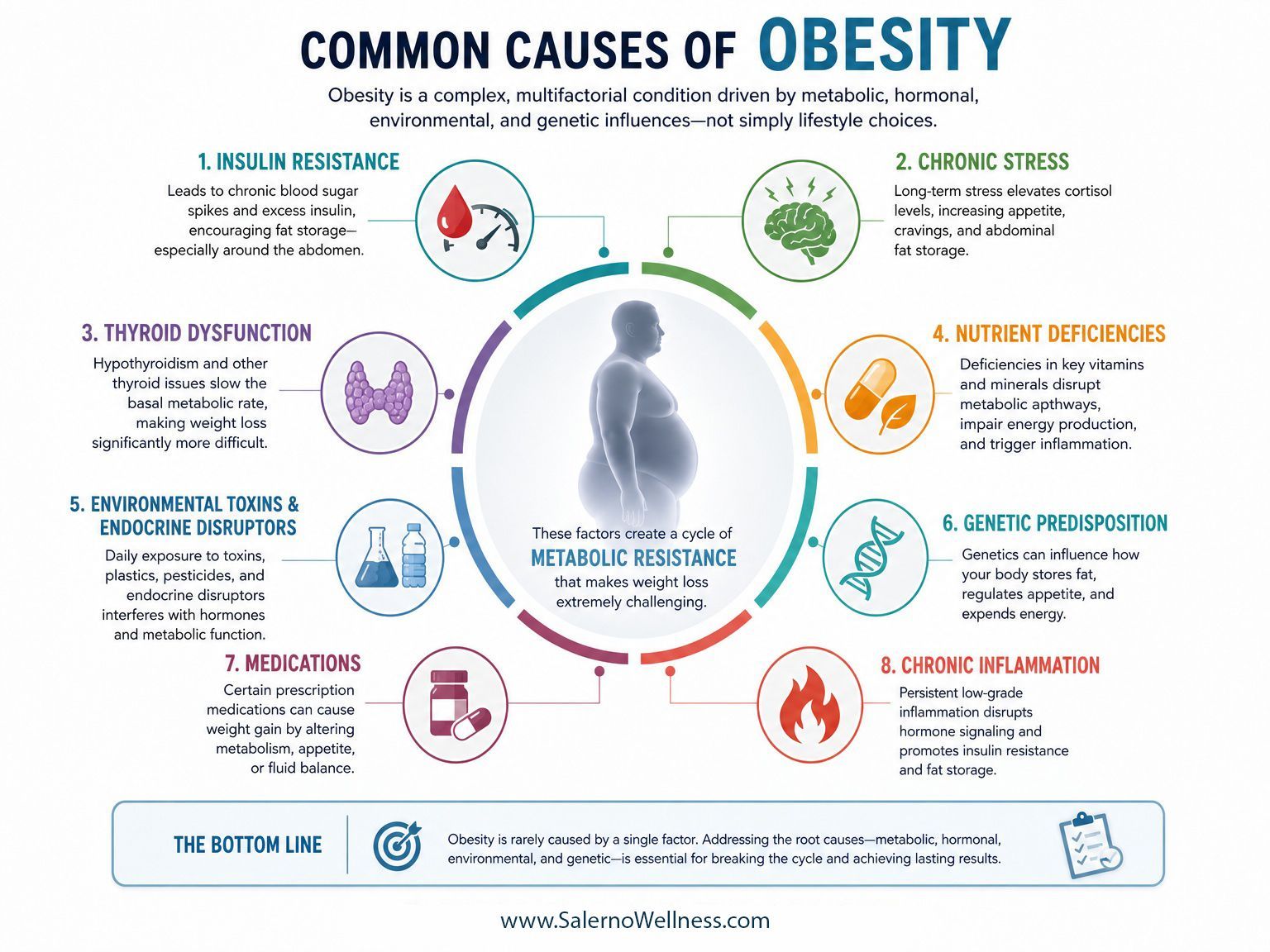
Common Causes of Obesity
Living with obesity is rarely a matter of willpower or personal failure, and it is essential to understand that struggling with excess weight is not your fault. Obesity often develops due to a complex interplay of metabolic, hormonal, and environmental factors rather than simple lifestyle choices. Insulin resistance frequently serves as a primary driver, causing chronic blood sugar spikes and encouraging excess fat storage, particularly around the abdomen. At the same time, long-term psychological stress elevates cortisol levels, which significantly increases appetite and promotes stubborn abdominal weight gain. Hypothyroidism and other thyroid dysfunctions further compound these issues by slowing down the body's baseline metabolic rate, making effective weight loss exceptionally difficult.
Systemic and cellular disruptions also play a critical role in weight-loss resistance. Essential nutrient deficiencies disrupt key metabolic pathways, impair cellular energy production, and trigger persistent inflammation. Meanwhile, daily exposure to environmental toxins and endocrine disruptors interferes directly with normal hormonal balance and metabolic function. Under-addressed genetic predispositions can further influence how individual bodies store fat and expend energy, while the regular use of certain prescription medications can alter metabolic function as a side effect. Together with chronic low-grade inflammation, these factors create a continuous cycle of metabolic resistance.
Salerno SWellness Clinically Relevant Modalities for Obesity
Obesity responds best to a treatment plan that addresses metabolic imbalance, hormonal dysfunction, inflammation, and detoxification efficiency. Each modality below supports a different physiological pathway involved in weight‑loss resistance and long‑term metabolic recovery. By combining targeted therapies with comprehensive diagnostic testing, Dr. Salerno can treat the underlying contributors to obesity rather than focusing on surface‑level symptoms.
These modalities are selected based on laboratory findings, metabolic patterns, and the specific drivers affecting each patient’s weight and health. Together, they help improve blood sugar regulation, reduce inflammation, support hormonal balance, and enhance metabolic resilience.
- IV Nutrient Therapy – Provides concentrated micronutrients and antioxidants that support metabolic repair and cellular energy production. This therapy helps replenish depleted nutrient stores, improve mitochondrial function, and reduce oxidative stress that contributes to weight‑loss resistance.
- Chelation Therapy – Assists in removing heavy metals and environmental toxins that may interfere with metabolic pathways. Chelation can help reduce inflammatory load, improve detoxification efficiency, and support healthier metabolic function when toxin exposure is identified.
- Bioidentical Hormone Replacement Therapy – Restores hormonal balance in patients with thyroid, adrenal, or sex hormone irregularities that contribute to weight gain. Optimizing hormone levels helps improve metabolic rate, reduce fat storage, and stabilize energy production.
- Clinical Peptide Therapy – Utilizes targeted peptides to enhance metabolic signaling, reduce inflammation, and support tissue recovery. Certain peptides help improve insulin sensitivity and promote healthier fat metabolism, making them valuable in obesity treatment plans.
- GLP‑1 Therapy – Supports blood sugar regulation, appetite control, and weight reduction — three essential components in reversing obesity. GLP‑1 therapy helps stabilize blood sugar, reduce cravings, and promote sustainable metabolic changes.
- Longevity Medicine – Focuses on cellular health, detoxification efficiency, and long‑term metabolic optimization. This approach integrates nutritional strategies, advanced diagnostics, and targeted supplementation to support metabolic resilience and reduce chronic inflammation.
- Red Light Therapy – Uses targeted wavelengths to reduce inflammation and support cellular energy production. This therapy may help decrease oxidative stress and improve metabolic stability in patients with chronic inflammatory patterns.
- Stem Cell Therapy – Provides regenerative support for patients with advanced inflammatory or metabolic changes. Stem cells may help promote tissue repair, reduce inflammatory signaling, and support long‑term metabolic function when conventional approaches are insufficient.
These modalities allow Dr. Salerno to create treatment plans that address obesity from multiple angles, including insulin regulation, hormonal balance, detoxification support, and inflammation reduction. By tailoring each therapy to the patient's diagnostic profile, he can target the specific factors contributing to weight‑loss resistance and guide patients toward measurable improvements in metabolic markers, weight, and overall wellness. This integrative approach supports long‑term recovery, improved energy, and more stable metabolic function for individuals in New York City and Connecticut.

Candidates for Obesity Weight Loss Care and Management
Ideal candidates for comprehensive obesity care include individuals who experience persistent weight gain despite consistent adjustments to diet and exercise, as well as those exhibiting clear signs of insulin resistance, such as frequent blood sugar crashes, intense carbohydrate cravings, or stubborn abdominal weight gain.
Patients diagnosed with metabolic syndrome, elevated triglycerides, or early-stage fatty liver disease also benefit significantly from a structured medical approach aimed at restoring cellular stability. Additionally, individuals suffering from chronic fatigue or low daily energy levels often have underlying mitochondrial or metabolic dysfunction that traditional weight-loss methods miss entirely.
Candidates with documented hormonal imbalances involving the thyroid, adrenal glands, or sex hormones are well-suited for physician-led restorative therapies. Those with a high burden of systemic inflammation—often presenting with joint discomfort or elevated cardiovascular risk markers—can gain substantial relief from integrative modalities. Early clinical intervention is particularly crucial for anyone seeking to prevent long-term health complications such as type 2 diabetes, hypertension, or heart disease. Ultimately, patients looking for long-term, sustainable weight reduction rather than quick-fix diets achieve the best outcomes through personalized care plans tailored to their unique diagnostic and laboratory findings.
Possible Side Effects of Treatment
Some individuals may experience temporary digestive changes as they begin nutritional protocols. Others may notice mild fatigue as metabolic systems adjust. IV nutrient therapy may cause minor soreness at the injection site. Diet or lifestyle adjustments may take time to integrate. Most side effects are mild and improve as treatment progresses. Regular monitoring helps ensure safe, effective care. Long‑term treatment is generally well tolerated and supports improved metabolic stability.
What Can Happen if Obesity Is Left Untreated
Untreated obesity can lead to significant long‑term complications. Insulin resistance may progress to prediabetes or diabetes. Chronic inflammation may increase cardiovascular risk. Elevated triglycerides may worsen liver health. Hormonal imbalance may intensify, affecting energy, weight, and mood. Long‑term metabolic instability may increase the risk of heart disease or stroke. Early treatment helps prevent these complications and supports improved metabolic health.
Patient Case Study
Jill, a 52‑year‑old patient, came to my office after years of weight gain, fatigue, and elevated blood pressure. Routine bloodwork revealed abnormal triglycerides and fasting glucose, suggesting metabolic dysfunction. During her evaluation, we discovered insulin resistance, nutrient deficiencies, and underlying inflammation. Further testing revealed thyroid imbalance and toxin‑related metabolic stress. We began a treatment plan that included GLP‑1 therapy, IV nutrient support, targeted nutritional protocols, and hormone optimization.
Within weeks, her energy improved and her cravings stabilized. Over the next several months, her metabolic markers normalized and she experienced significant weight reduction. Today, Jill maintains balanced health with ongoing monitoring. Her case highlights the importance of comprehensive evaluation and integrative care for obesity.
Why Patients Choose Dr. John Salerno for Obesity Care and Weight Loss
Patients struggling with obesity frequently seek out Dr. John Salerno because his functional and integrative approach addresses the deeper metabolic and hormonal root causes of weight-loss resistance rather than offering temporary, superficial fixes. Many individuals turn to Salerno Wellness after conventional diets and exercise routines fail to produce lasting results, often discovering unaddressed issues like insulin resistance or chronic systemic inflammation during their initial evaluations. By evaluating each patient through a comprehensive diagnostic lens, Dr. Salerno identifies specific drivers—such as thyroid dysfunction, adrenal imbalances, or nutrient deficiencies—that hinder effective weight management. Patients appreciate his physician-led, highly personalized care plans that prioritize cellular recovery and long-term metabolic stability over generic, cookie-cutter solutions.
In addition to thorough diagnostic testing, individuals choose Dr. Salerno for access to advanced, clinically relevant modalities like GLP-1 therapy, bioidentical hormone replacement, targeted IV nutrient support, and clinical peptide therapy. These tailored interventions work synergistically to regulate blood sugar, curb cravings, reduce oxidative stress, and optimize daily energy production. With over 30 years of medical experience serving patients across New York City and Connecticut, Dr. Salerno has built a trusted reputation for guiding individuals safely through sustainable weight reduction. Ultimately, patients partner with Dr. Salerno not just to lose weight, but to improve their metabolic resilience, protect against long-term health complications, and achieve lasting overall wellness.
Patient FAQs
How does Dr. Salerno’s functional approach to obesity differ from conventional weight-loss programs? Traditional programs often focus strictly on caloric restriction and increased exercise. Dr. Salerno evaluates obesity through a functional and integrative lens, utilizing advanced diagnostic testing to identify systemic drivers such as mitochondrial dysfunction, chronic inflammation, nutrient deficiencies, and heavy metal toxicity that cause weight-loss resistance.
Can GLP-1 therapy be combined with other functional treatments like BHRT or IV Nutrient Therapy? Yes, combining these modalities is often key to achieving optimal metabolic recovery. While GLP-1 therapy supports appetite control and blood sugar stabilization, pairing it with Bioidentical Hormone Replacement Therapy (BHRT) and IV Nutrient Therapy ensures your cells receive essential micronutrients, preserves lean muscle, and restores hormonal balance throughout the weight reduction process.
Why is long-term monitoring necessary if my weight and metabolic markers begin to improve? Obesity is a complex, progressive condition governed by dynamic metabolic and hormonal feedback loops. Regular clinical monitoring allows Dr. Salerno to adjust treatment protocols as your body adapts, ensuring stable weight maintenance, preventing rebound weight gain, and protecting against long-term complications like cardiovascular disease or prediabetes.
How do environmental toxins and heavy metals contribute to weight-loss resistance? Toxins and heavy metals act as endocrine disruptors that interfere with thyroid function, impair mitochondrial energy production, and trigger systemic inflammation. When these toxic burdens accumulate, the body’s metabolic efficiency drops, making fat loss difficult; targeted modalities like Chelation Therapy help remove these barriers to restore baseline metabolic function.
Is it possible to have severe metabolic dysfunction from obesity even if I feel fine? Yes, obesity frequently develops and impacts internal systems without immediate, obvious symptoms. Underlying issues such as elevated triglycerides, insulin resistance, visceral fat accumulation, and early fatty liver changes can progress silently for years before causing noticeable fatigue, joint discomfort, or cardiovascular strain.

Contact Dr. John Salerno For A Consultation on Obesity Care, Treatment, and Weight Loss Management in Manhattan, NY, and Connecticut
Dr. John Salerno approaches obesity as a complex metabolic and hormonal condition that requires personalized, root-cause evaluation rather than generic weight-loss tactics. By uncovering underlying drivers such as insulin resistance, systemic inflammation, thyroid imbalances, and cellular toxicity, his practice creates targeted care plans designed for sustainable recovery.
Patients receive physician-led treatments using advanced modalities such as GLP-1 therapy, bioidentical hormone optimization, IV nutrient support, and clinical peptide therapy. This comprehensive, multi-angled strategy helps restore blood sugar stability, improve daily energy, and reduce long-term cardiovascular and metabolic health risks. Ultimately, this integrative model empowers individuals across New York City and Connecticut to achieve lasting weight management and optimal overall wellness.
Take the first step toward overcoming weight-loss resistance and restoring your metabolic health today. Contact Salerno Wellness to schedule your comprehensive consultation with Dr. John Salerno and receive a customized, physician-led treatment plan tailored to your unique health goals.
Please contact us today.
Additional References
- Health Risks of Overweight and Obesity - National Institute of Diabetes and Digestive and Kidney Diseases
- Consequences of Obesity and Weight Loss: A Devil's Advocate Position - National Library of Medicine