Clinical Peptide Therapy NYC – Dr. John Salerno

Restoring Cellular Function for Healthy Aging, Repair, and Metabolic Balance by Salerno Wellness in Manhattan, NY, and Connecticut
“Clinical Peptide Therapy allows us to work directly with the body’s natural repair systems in a way that is both precise and deeply supportive. When we identify the pathways that are slowing down with age, we can use targeted peptides to help restore balance and improve long‑term vitality. My goal is always to use these therapies responsibly, safely, and in a way that genuinely enhances your quality of life.”
-Dr. John Salerno
Peptides have become one of the most promising tools in longevity medicine because they work at the cellular level to support repair, recovery, and metabolic balance. Many patients turn to peptide therapy when they notice changes in energy, sleep, body composition, or cognitive performance that traditional treatments have not fully addressed. These therapies target specific biological pathways involved in aging, helping the body restore functions that naturally decline over time. Patients appreciate that peptide therapy can be personalized, measured, and integrated into a broader longevity plan. This approach ensures that peptides are used safely and effectively, with clear clinical goals.
What Are Clinical Peptides?
Peptides are short chains of amino acids that act as signaling molecules in the body. They help regulate essential functions such as metabolism, immune response, inflammation control, tissue repair, and hormonal communication. As we age, the body produces fewer of these natural peptides, which can contribute to slower recovery, reduced energy, and changes in cognitive or metabolic performance. Clinical peptide therapy uses physician‑guided formulations to restore these signals and support healthier aging. Patients value this approach because it works with the body’s natural systems rather than overriding them.
Peptides are not one‑size‑fits‑all. Each peptide has a specific purpose, whether it is supporting mitochondrial function, improving sleep quality, enhancing metabolic efficiency, or promoting tissue repair. When used under medical supervision, peptides can complement other longevity treatments and create a more complete strategy for long‑term wellness. This makes them a powerful tool for patients who want to address aging at its root rather than manage symptoms.
How Clinical Peptides Work
Peptides bind to receptors on cells and trigger targeted biological responses. These responses may include improved cellular communication, enhanced repair processes, or more efficient metabolic activity. Because peptides are highly specific, they can influence particular pathways without affecting unrelated systems. Patients often appreciate this precision because it reduces the risk of unwanted side effects and enables more personalized treatment.
Many peptides support mitochondrial health, which plays a central role in energy production and cellular resilience. Others help regulate inflammation, which is a major driver of accelerated aging. Some peptides influence hormonal balance, while others support immune function or cognitive clarity. When combined with advanced diagnostics, peptide therapy becomes a strategic tool that aligns with your unique biology and long‑term goals.

Conditions Clinical Peptides Support
Patients often explore peptide therapy when they begin noticing changes that do not match their lifestyle or when they want to stay ahead of age‑related decline. Many of these concerns develop gradually, leaving patients unsure why their energy, recovery, or cognitive performance has shifted. Peptides offer a targeted approach to support the biological pathways underlying these changes, helping the body restore balance and resilience. This section outlines the conditions and goals that peptide therapy may support as part of a comprehensive longevity plan.
- Low Energy and Fatigue - Peptides that support mitochondrial function may help improve cellular energy production and reduce persistent fatigue. Patients often notice more stable daytime energy and better physical endurance as these pathways strengthen. This can be especially helpful for individuals who feel tired despite adequate sleep or healthy habits.
- Metabolic Imbalance and Weight Changes - Certain peptides may help regulate appetite, improve insulin sensitivity, and support healthier body composition. These effects can complement structured weight‑management programs and nutritional strategies. Patients appreciate the added metabolic support when lifestyle changes alone are not producing the desired results.
- Cognitive Fog and Reduced Mental Clarity - Some peptides influence pathways related to focus, memory, and cognitive performance. Patients often report clearer thinking, improved concentration, and better mental stamina when these peptides are integrated into their care. These benefits tend to develop gradually as the brain responds to improved cellular signaling. We now offer IV Cerebrolysin, a highly promising neuro‑support peptide shown to enhance memory, cognitive clarity, and long‑term brain health.”
- Slow Recovery and Tissue Repair - Peptides that support tissue repair may help active individuals recover more efficiently from exercise, injury, or surgery. These therapies can promote healthier healing and reduce downtime. Patients value the ability to maintain their activity level without feeling limited by slow recovery. Peptides such as TB‑500, GHK‑Cu, and BPC‑157 provide targeted support for joint healing, tissue repair, and accelerated recovery from inflammation or injury.
- Sleep Disruption and Poor Restorative Sleep - Certain peptides may help regulate circadian rhythms and support deeper, more restorative sleep. Patients often notice improvements in sleep quality, nighttime recovery, and morning alertness. These changes can have a meaningful impact on overall well‑being and daily performance.
These conditions are among the most common reasons patients consider peptide therapy as part of their longevity plan. Each treatment is selected based on diagnostic findings and personalized goals, ensuring that peptides are used safely and effectively. This structured approach helps patients feel supported, informed, and confident as they move toward healthier aging.
Who Is an Ideal Candidate for Clinical Peptide Therapy
Patients who are ideal candidates for clinical peptide therapy are often individuals who feel their body is not performing the way it used to, despite maintaining healthy habits and a consistent lifestyle. Many notice subtle yet persistent changes in energy, recovery, sleep quality, or cognitive sharpness that do not align with their age or activity level.
Others are beginning to see early signs of metabolic slowdown, such as increased abdominal weight, fluctuating appetite, or difficulty maintaining muscle tone.
Some patients seek peptide therapy because they want a more proactive approach to aging and prefer targeted treatments that work with the body’s natural repair systems. Individuals who experience slower healing after exercise or injury may also benefit from peptides that support tissue repair and cellular resilience.
Patients who struggle with restorative sleep or feel unrefreshed in the morning often find that peptides help regulate nighttime recovery and improve overall well‑being. Adults who work in high‑demand environments may turn to peptides to support mental clarity, focus, and sustained cognitive performance. Others are motivated by a desire to maintain long‑term vitality and prevent age‑related decline before symptoms become more noticeable. Patients who have tried traditional treatments without meaningful improvement often appreciate the precision and personalization that peptide therapy provides.
Individuals who value measurable progress and structured follow‑up tend to do well with peptides because the therapy evolves as their needs change. Those who want to integrate peptides with hormone optimization, metabolic support, or IV therapy may find that peptides enhance the effectiveness of their broader longevity plan. Patients who are committed to long‑term health and want a physician‑guided strategy for aging well are often the best candidates for clinical peptide therapy.
What Patients Experience After Therapy
Patients frequently report improvements in energy, recovery, and overall vitality when peptides are integrated into their care. Many notice better sleep quality, clearer thinking, and a more stable mood. Others experience enhanced physical performance, faster healing, or improved metabolic balance. These changes often develop gradually as the body responds to targeted signaling from peptides.
Patients also value the sense of control that comes from understanding how peptides fit into their broader longevity plan. Regular follow‑up appointments help track progress and adjust dosing as needed. This level of oversight ensures that peptide therapy remains safe, effective, and aligned with your long‑term goals.
How Clinical Peptide Therapy Supports Patients
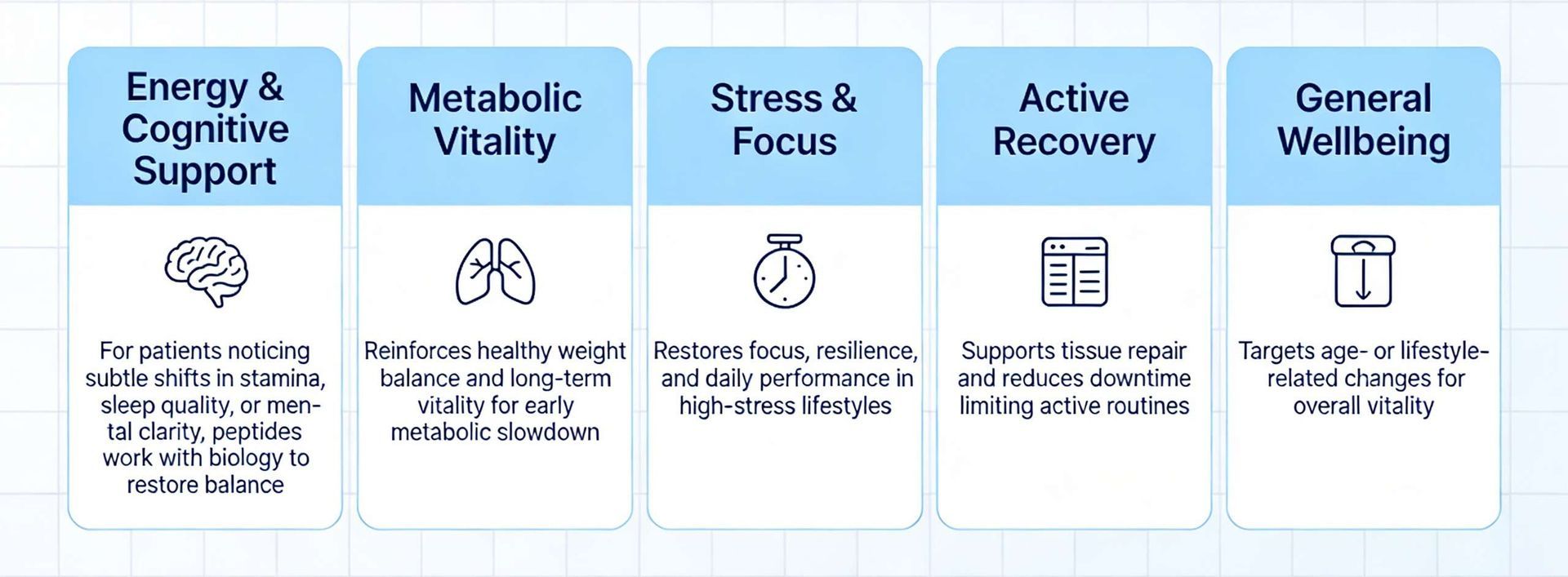
Peptide therapy supports patients who feel their energy, recovery, or cognitive performance has shifted in ways that no longer match their lifestyle or age. Many individuals notice subtle changes in stamina, sleep quality, or mental clarity and want a targeted approach that works with their biology rather than against it. Others are beginning to experience early metabolic slowdown and appreciate how peptides can reinforce healthy weight balance and long‑term vitality. Patients who live demanding, high‑stress lives often find that peptides help restore focus, resilience, and overall daily performance. Active individuals value the way peptides support tissue repair and reduce the downtime that limits their routine.
Many patients also seek peptide therapy because they want a proactive strategy that addresses aging at the cellular level instead of waiting for symptoms to progress. Those who have tried traditional treatments without meaningful improvement often feel encouraged by the precision and personalization peptides provide. Across all goals, patients appreciate that peptide therapy offers a structured, physician‑guided path toward feeling stronger, clearer, and more balanced over time.
What to Expect During Treatment
Your peptide therapy experience begins with a detailed consultation that explores your symptoms, lifestyle, and long‑term health goals. Diagnostic testing is used to understand the biological pathways that may be slowing down and to determine which peptides are most appropriate for your needs. Once your results are reviewed, a personalized treatment plan is created that outlines the specific peptides, dosing strategy, and expected timeline for improvement. Patients appreciate that the process is structured, transparent, and grounded in clinical reasoning rather than guesswork.
As therapy begins, you will receive guidance on how to use your peptides safely and consistently to support optimal results. Follow‑up appointments allow your physician to monitor progress, adjust dosing, and ensure that your treatment remains aligned with your goals. Most patients notice gradual improvements in energy, recovery, sleep quality, or cognitive clarity as their body responds to targeted signaling. Throughout the process, you remain supported, informed, and actively involved in your long‑term wellness plan.
Patient Safety and Monitoring
Clinical peptide therapy at Salerno Wellness is delivered with a strong emphasis on safety, precision, and responsible medical oversight. Every treatment plan is guided by diagnostic findings that help determine which peptides are appropriate and how they should be used. Patients receive clear instructions on dosing, timing, and expected responses so they feel confident and informed throughout their therapy.
Regular monitoring ensures that your progress is tracked and that any adjustments are made based on your individual needs rather than a one‑size‑fits‑all approach. This level of oversight helps reduce the risk of unwanted side effects and supports a more predictable therapeutic experience. Peptides are selected for their targeted mechanisms, allowing them to influence specific pathways without affecting unrelated systems. Patients appreciate that safety is prioritized at every step, from initial evaluation to ongoing follow‑up. This structured approach ensures that peptide therapy remains a supportive, clinically grounded part of your long‑term wellness strategy.
Related Services that Complement Peptide Therapy
Clinical peptide therapy integrates naturally with several other services offered at Salerno Wellness, creating a more complete approach to long‑term health. Many patients pair peptides with hormone optimization to support metabolic balance, energy stability, and overall vitality. Others combine peptide therapy with IV treatments to enhance nutrient absorption, cellular repair, and immune resilience. Patients focused on weight management often find that peptides complement nutritional strategies and metabolic support programs.
Individuals seeking longevity medicine appreciate how peptides fit into a broader plan that includes detoxification, inflammation control, and lifestyle optimization. Those addressing thyroid or adrenal concerns may use peptides to support recovery and improve overall system balance. Each related service is selected based on your diagnostic findings and long‑term goals, ensuring that your care remains cohesive and personalized. This integrated model helps patients achieve more meaningful, sustainable improvements in their health.
Clinical Peptide Therapy Frequently Asked Questions
- Are peptides the same as hormones? - No. Peptides are signaling molecules that influence specific pathways, while hormones regulate broader systems. Peptides tend to be more targeted and may have fewer systemic effects.
- How long does it take to notice results? - Many patients begin to feel improvements in energy, sleep, or recovery within several weeks. More significant metabolic or cognitive changes may develop over several months as the body adapts.
- Are peptides safe for long‑term use? - Peptides are considered safe when used under medical supervision. Regular monitoring ensures that dosing remains appropriate and that the therapy continues to align with your goals.
- Can peptides help with weight management? - Certain peptides may support appetite regulation, insulin sensitivity, and metabolic efficiency. These effects can complement a structured weight‑management plan.
- Do peptides replace other longevity treatments? Peptides are typically used alongside other therapies such as hormone optimization, nutritional support, and IV treatments. They enhance the overall effectiveness of your longevity plan rather than replacing other modalities.

Contact Dr. Salerno and Take the Next Step Toward Healthier Aging in Manhattan, NYC and Connecticut
If you are ready to explore how clinical peptides can support your energy, recovery, and long‑term vitality, Salerno Wellness is here to guide you. Your treatment begins with a detailed evaluation, continues with personalized care, and evolves as your health improves. This is your opportunity to take a proactive, informed approach to aging and feel your best for years to come.
Please contact us today.
Medical Disclaimer
Clinical peptide therapy at Salerno Wellness is a physician-directed service tailored to each patient’s diagnostic findings, health history, and long-term goals. The information on this page describes the clinical approach offered by Dr. John Salerno and reflects how peptide therapy is used within his functional, integrative, and complementary medical practice. Treatment plans, dosing strategies, and expected outcomes vary from person to person, and a comprehensive consultation is required to determine the most appropriate approach for your individual needs.