The Science Behind Peptide Therapy: What Patients Should Know Before Starting
As a physician, one of the most exciting areas of modern medicine for me has been the evolution of peptide therapy and the impact it can have on a patient's daily health. Over the years, I've watched countless individuals struggle with fatigue, slow metabolism, inflammation, and poor recovery — often with "normal" lab results that don't explain how they feel.
Peptides allow us to target the body's underlying communication systems, helping restore balance in ways traditional medicine often overlooks. What I appreciate most is that peptides don't override your biology; they support it, guiding your cells to function the way they were designed to. Patients frequently tell me they feel clearer, stronger, and more like themselves again once the right peptide protocol is in place.
This week, let's see if peptide therapy is right for you. If you've been searching for a more precise, science‑driven approach to improving your health, then this is an option worth exploring, and certainly a phone call to learn more.
-Dr. John Salerno
The Role Peptides Play in Repair, Recovery, and Metabolic Health
Peptide therapy has become one of the most talked‑about advancements in modern functional and regenerative medicine. Patients hear about peptides for energy, weight loss, sleep, muscle repair, immune support, and longevity — but very few understand what peptides actually are, how they work, or why they must be used under medical supervision.
At Salerno Wellness, peptide therapy is one of the most powerful tools Dr. Salerno uses to help patients improve metabolic function, hormone balance, cellular repair, and overall vitality. But before starting peptide therapy, it's important to understand the science behind it and what makes this treatment so effective.
What Peptides Actually Are
Peptides are short chains of amino acids — essentially small fragments of proteins — that act as signaling molecules in the body. They tell cells what to do. Some peptides regulate metabolism, others influence inflammation, and others help repair tissues or support hormone production. Because peptides are naturally occurring, the body recognizes them easily and responds quickly. This is why peptide therapy often produces noticeable changes in energy, sleep, recovery, and body composition.
Unlike medications that force the body into a specific response, peptides work by enhancing or restoring pathways that already exist. They support the body's own communication systems rather than overriding them. This makes peptide therapy both powerful and physiologically natural.
Types of Peptides
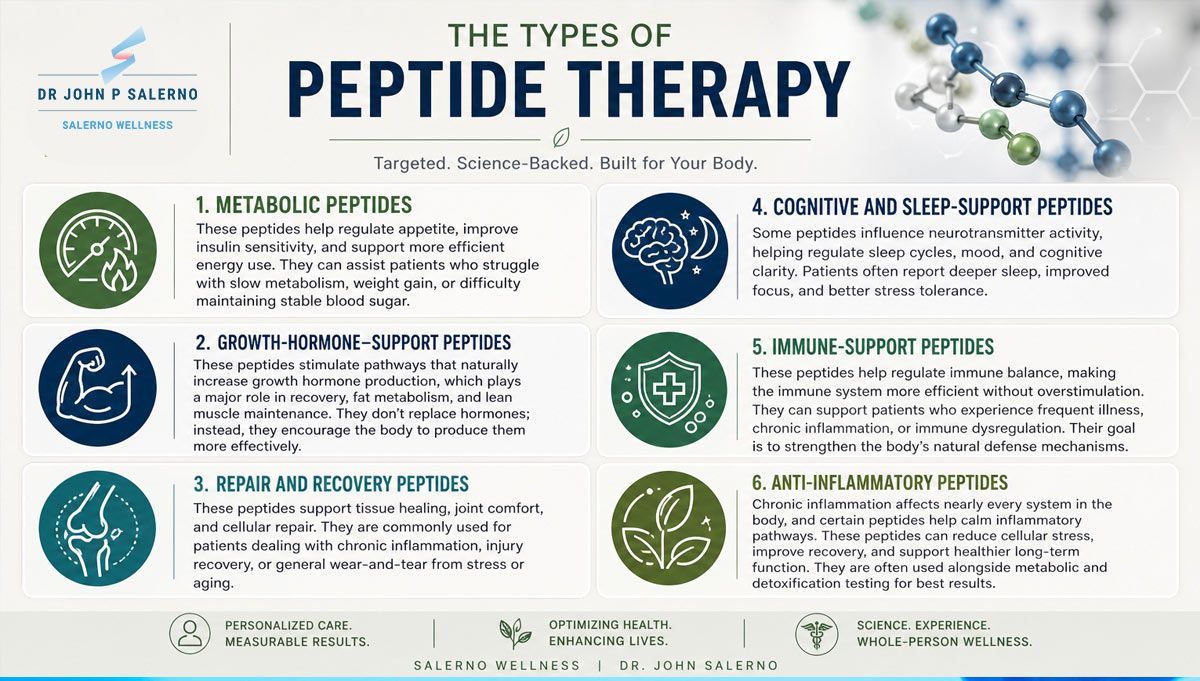
Peptide therapy isn’t one single treatment — it’s a broad category of targeted molecules, each designed to support a specific biological pathway. Different peptides influence metabolism, repair, inflammation, hormone signaling, or cognitive function. Below are some of the most commonly used peptide categories and what patients should understand about each.
- Metabolic Peptides – These peptides help regulate appetite, improve insulin sensitivity, and support more efficient energy use. They can assist patients who struggle with slow metabolism, weight gain, or difficulty maintaining stable blood sugar. When paired with proper testing, metabolic peptides can help restore healthier metabolic signaling.
- Growth‑Hormone – Support Peptides – These peptides stimulate pathways that naturally increase growth hormone production, which plays a major role in recovery, fat metabolism, and lean muscle maintenance. They don’t replace hormones; instead, they encourage the body to produce them more effectively. Patients often notice improvements in sleep, energy, and body composition.
- Repair and Recovery Peptides – These peptides support tissue healing, joint comfort, and cellular repair. They are commonly used for patients dealing with chronic inflammation, injury recovery, or general wear‑and‑tear from stress or aging. Their ability to enhance repair pathways makes them valuable for long‑term resilience. Peptides such as TB‑500, GHK‑Cu, and BPC‑157 are highly effective for joint support, tissue repair, and accelerated recovery from inflammation or injury.
- Cognitive and Sleep‑Support Peptides – Some peptides influence neurotransmitter activity, helping regulate sleep cycles, mood, and cognitive clarity. Patients often report deeper sleep, improved focus, and better stress tolerance. These peptides work by supporting the brain's natural signaling systems rather than overriding them. We now offer IV Cerebrolysin, one of the most promising neuro‑support peptides for memory, cognitive clarity, and long‑term brain health.
- Immune‑Support Peptides – These peptides help regulate immune balance, making the immune system more efficient without overstimulation. They can support patients who experience frequent illness, chronic inflammation, or immune dysregulation. Their goal is to strengthen the body's natural defense mechanisms.
- Anti‑Inflammatory Peptides – Chronic inflammation affects nearly every system in the body, and certain peptides help calm inflammatory pathways. These peptides can reduce cellular stress, improve recovery, and support healthier long‑term function. They are often used alongside metabolic and detoxification testing for best results.
Peptide therapy is highly customizable, and each peptide serves a different purpose depending on a patient's symptoms, lab results, and long‑term goals. This is why Dr. Salerno evaluates metabolic markers, inflammation levels, hormone balance, and overall physiology before recommending any peptide protocol. When used correctly and under medical supervision, peptides can become one of the most effective tools for improving energy, recovery, metabolic health, and overall vitality.
Why Peptide Therapy Has Become So Popular
Peptides have gained attention because they address issues that traditional medicine often overlooks. Many patients struggle with fatigue, slow metabolism, poor sleep, inflammation, or difficulty losing weight — yet their standard lab results appear "normal." Peptides can target the underlying signaling problems that contribute to these symptoms.
For example, certain peptides help improve mitochondrial efficiency, which affects energy production. Others support growth hormone pathways, which influence metabolism, muscle repair, and fat loss. Some peptides help regulate appetite, reduce inflammation, or support immune resilience. Because peptides work at the cellular level, they can create improvements that patients feel throughout their entire body.
How Peptides Work in the Body
Peptides bind to receptors on the surface of cells and trigger specific biological actions. These actions vary depending on the peptide's structure and purpose. Some peptides activate repair pathways, helping tissues recover from stress or injury. Others stimulate hormone production or improve the body's sensitivity to existing hormones. Some peptides enhance neurotransmitter activity, improving sleep, mood, or cognitive function.
The key is specificity. Each peptide has a unique sequence of amino acids, and that sequence determines its function. This is why peptide therapy must be personalized. The right peptide can create meaningful improvements. The wrong peptide may do nothing — or may not be appropriate for a patient's health profile.
Why Peptide Therapy Requires Medical Oversight
Although peptides are naturally occurring, peptide therapy is not something patients should attempt on their own. Quality, dosing, timing, and medical monitoring all matter. Peptides must be sourced from reputable compounding pharmacies, not online vendors. They must be matched to a patient's metabolic profile, hormone status, inflammation levels, and overall health goals.
Dr. Salerno evaluates each patient's blood work, symptoms, and medical history before recommending peptide therapy. This ensures that the treatment is safe, targeted, and effective. Peptides are powerful tools — but only when used correctly.
What Patients Typically Experience
Patients often report improvements in energy, sleep quality, recovery, metabolism, and mental clarity. Some peptides help regulate appetite or support fat loss. Others improve muscle repair, joint comfort, or immune resilience. The experience varies depending on the peptide and the patient's health status, but the most common feedback is that patients "feel like themselves again."
Peptide therapy is not a quick fix. It is a physiological support system that helps the body function more efficiently. Most patients begin noticing changes within several weeks, with deeper improvements occurring over time as cellular pathways strengthen.
How Peptides Fit Into Dr. Salerno's Medical Approach
Peptide therapy is one part of a larger clinical strategy. Dr. Salerno uses peptides alongside metabolic testing, hormone evaluation, inflammation markers, nutritional analysis, and detoxification assessments. This comprehensive approach ensures that peptides are used in the right context — not as isolated treatments.
For example, peptides that support growth hormone pathways work best when inflammation is controlled and metabolic function is stable. Peptides that improve mitochondrial efficiency work best when nutrient deficiencies are corrected. Peptides that support immune function work best when toxicity levels are addressed. This is why peptide therapy is so effective at Salerno Wellness: it is integrated into a complete medical plan.
Who Peptide Therapy Is Right For
Peptide therapy may be appropriate for patients who struggle with low energy, slow metabolism, poor sleep, inflammation, weight gain, muscle loss, or difficulty recovering from exercise or stress. It may also benefit patients seeking improved cognitive function, immune support, or overall vitality.
However, peptide therapy is not a one‑size‑fits‑all solution. The best way to determine whether peptides are right for you is through a medical evaluation that includes blood work, metabolic testing, and a review of your symptoms and goals.
Clinical Takeaway
Peptide therapy is one of the most advanced tools in modern functional medicine. It works by supporting the body's natural signaling systems, improving cellular communication, and enhancing pathways that influence energy, metabolism, repair, and resilience. When used under medical supervision, peptides can help patients feel stronger, more energetic, and more balanced.
If you're curious about peptide therapy and want to know whether it's right for you, Dr. Salerno can guide you through a personalized evaluation. His approach ensures that peptide therapy is safe, targeted, and tailored to your unique physiology.
To learn more or to schedule a peptide consultation, contact Salerno Wellness and speak with Dr. Salerno's team about beginning your evaluation.