Metabolic Syndrome Weight Loss Challenges

Being overweight almost always results from metabolic dysfunction, not a lack of willpower. I have been helping patients for over thirty years lose weight and keep it off by focusing on the real issues: Insulin resistance, fatty liver, hormonal disruption, and chronic inflammation, which drive stubborn weight gain and explain why conventional dieting often fails.
How much weight do you want to lose to feel and function at your best? The amount is irrelevant when proper metabolic support guides your weight loss. This week, let's look at weight loss through a medical lens and show how reaching your optimal weight can improve your health and overall well‑being. It's also an opportunity to feel better about your body and more confident in yourself.
-Dr. John Salerno
The Smarter Medical Path to Weight Loss: Insulin Resistance, Fatty Liver, and Personalized Therapy at Salerno Wellness
Understanding Overweight and Insulin Resistance
Insulin resistance develops gradually, often years before blood sugar becomes abnormal. When the liver and muscles stop responding to insulin, the pancreas compensates by producing more. Elevated insulin levels push the body into a fat‑storage mode, increasing hunger, cravings, and post-meal fatigue. Over time, this pattern leads to abdominal weight gain, elevated triglycerides, and a progressive slowdown of metabolic function.
Correcting insulin resistance is one of the fastest ways to restore metabolic flexibility. When insulin levels fall, the body can access stored fat and burn it efficiently.
A Fatty Liver Is a Central Driver of Weight Gain
Fatty Liver Disease is now one of the most common metabolic disorders I diagnose! It occurs when excess carbohydrates are converted into fat and stored inside liver cells. As liver function declines, insulin signaling becomes impaired, which further increases insulin levels and accelerates fat storage throughout the body.
Patients with fatty liver often experience stubborn abdominal weight, fatigue, brain fog, and weight loss resistance despite dieting. Treating fatty liver is therefore a primary objective in my weight‑loss programs, because a healthier liver restores metabolic flexibility and makes fat loss possible again.
My Physician-Led Framework for Weight Loss at Salerno Wellness
At Salerno Wellness, metabolic weight loss is a medical process. Every plan begins with a detailed evaluation so we can understand exactly how your metabolism is functioning before we change your diet or introduce therapies. This approach allows us to design a plan that matches your biology rather than relying on generic diet templates.
Personal Evaluations Before Designing a Diet Plan
Your Salerno diet plan is always evolving, based on your metabolic markers, liver function, hormone balance, inflammation levels, gut health, and body composition. This comprehensive strategy allows me to identify the specific metabolic blocks preventing weight loss and determine the most effective interventions for each patient at every stage of weight loss.
Different metabolic profiles require different macronutrient strategies. I may use ketogenic, Mediterranean, low‑carb, and gut‑focused plans, but always in a personalized, physician‑directed way. Here is a brief summary of each:
- Short-Term Ketogenic Diet as a Metabolic Reset - A medically supervised ketogenic plan can rapidly improve liver fat, insulin sensitivity, and blood sugar stability. My version of keto emphasizes clean, anti‑inflammatory fats, high‑quality proteins, and careful electrolyte support. This phase is intentionally short-term and transitional — a clinical tool to reset metabolism, not a permanent lifestyle.
- Mediterranean Diet for Long-Term Metabolic Stability - Once liver fat and insulin resistance improve, I transition patients to a Mediterranean‑style plan that supports heart health, brain function, and long‑term weight maintenance. This approach emphasizes vegetables, lean proteins, healthy fats, and controlled carbohydrates, making it ideal for preserving metabolic gains.
- Low-Carb Anti-Inflammatory Nutrition - For patients who cannot tolerate strict ketosis, I design a moderate low‑carb plan that reduces sugar and refined starches without extreme restriction. This approach stabilizes blood sugar, lowers insulin levels, and reduces inflammation while still allowing a realistic variety of foods.
- Leaky Gut Focused Diet Plans - When patients present with bloating, food sensitivities, or microbiome imbalance, I prioritize gut‑directed nutrition. By calming the gut and reducing systemic inflammation, we often see improvements in weight, energy, mood, and sleep that standard diets fail to deliver.

Modalities That Support Weight Loss at Salerno Wellness
Patients often ask which modalities I use to help accelerate weight loss and improve metabolic health. While nutrition is foundational, targeted therapies can significantly enhance results when used appropriately. Below is an overview of the modalities I incorporate into treatment plans.
Before listing them, it is important to understand that I choose each modality based on the patient’s metabolic profile, hormone status, liver health, and overall clinical picture. No two patients receive the same combination, because no two metabolisms are identical.
- Hormone optimization corrects thyroid, cortisol, estrogen, progesterone, and testosterone imbalances that slow metabolism, increase abdominal fat, and reduce energy.
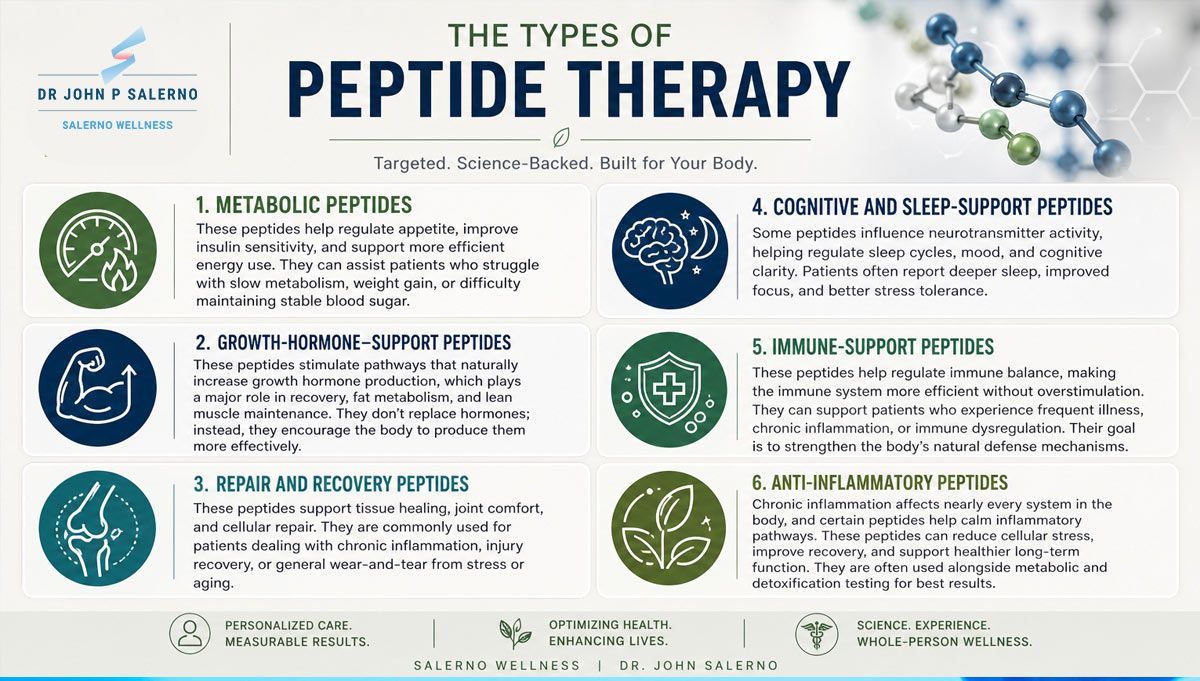
- Peptide therapy may be introduced to regulate appetite, improve insulin sensitivity, enhance fat burning, support lean muscle, and improve sleep and recovery.
- Personalized nutrition plans match the patient’s metabolic needs, whether they require a ketogenic reset, Mediterranean maintenance, low‑carb anti‑inflammatory support, or gut‑focused healing.
- Liver-directed therapies reduce liver fat, improve insulin signaling, and restore metabolic flexibility, which is essential for sustainable weight loss.
- Inflammation-reduction strategies calm the immune system, improve gut function, and support hormonal balance, all of which influence weight regulation.
These modalities work synergistically to correct the underlying metabolic dysfunction driving weight gain. With physician oversight, they create a powerful framework for long-term success.
Hormone Therapy as a Metabolic Accelerator
Hormones regulate metabolism, appetite, mood, and energy. When they are out of balance, weight loss becomes extremely difficult. By correcting thyroid imbalances, stabilizing cortisol patterns, and balancing sex hormones, we can significantly improve metabolic efficiency and fat‑burning capacity.
Peptide Therapy as an Advanced Metabolic Tool
Peptides offer a modern, targeted way to influence metabolism and tissue repair. When used correctly, they can improve appetite regulation, insulin sensitivity, fat burning, and lean muscle. Peptide therapy is always combined with nutrition and lifestyle interventions, never used as a stand‑alone shortcut.
Attention People with Diabetes: I Have a Different Way for You to Approach Weight and Blood Sugar
If you are living with prediabetes or Type 2 diabetes, your weight, blood sugar, and liver health are tightly connected. Many patients are told simply to “lose weight,” without any guidance on how diet composition and liver fat influence glucose control. In my practice, I treat diabetes and prediabetes as metabolic conditions that require precision, not generic advice.
I focus on reducing liver fat, improving insulin sensitivity, and stabilizing blood sugar through carefully structured nutrition and targeted therapies. For many diabetic patients, a short‑term, physician‑supervised low‑carbohydrate or ketogenic phase can rapidly improve liver fat and insulin dynamics, followed by a transition to a sustainable Mediterranean or low‑carb pattern.
When we address the liver, hormones, and inflammation together, blood sugar often becomes easier to control, medications can sometimes be reduced under supervision, and weight loss becomes more predictable. For diabetics, the goal isn't just a lower number on the scale—it is a more stable, safer metabolic state that protects the heart, brain, and liver over time.
Why My Integrated Approach Works When Generic Diets Fail
Most commercial weight‑loss programs focus on calories and willpower. My approach focuses on biology. When we treat insulin resistance, reduce liver fat, balance hormones, calm the gut, and use targeted therapies like peptides, the body stops fighting weight loss and starts cooperating.
Patients can expect a thorough medical evaluation, a personalized nutrition plan, careful monitoring of metabolic markers, and therapies chosen specifically to support long‑term health — not just short‑term scale changes.
Take the Next Step with Salerno Wellness
If you are struggling with stubborn weight, fatty liver, prediabetes, or diabetes, you do not need another generic diet — you need a medical plan built around your metabolism. At Salerno Wellness, we combine advanced diagnostics, personalized nutrition, hormone optimization, and peptide therapy to create a structured, physician‑led path to real metabolic change.
The first step is a comprehensive evaluation of your liver, hormones, blood sugar, and inflammation to understand exactly what is driving your weight and symptoms. From there, we design a plan that is specific to you and adjust it as your body responds.
If you are ready to move beyond trial‑and‑error dieting and address the root causes of your weight and metabolic health, schedule a consultation with Salerno Wellness and begin a smarter, medically guided path to lasting change.
Please contact us online or call us at (212) 582-1700 in New York City or (475) 269-2138 in Connecticut to schedule an appointment.
Additional References