The Invisible Shift in Food Manufacturing That's Fueling Chronic Disease

This isn't another "bad food is bad for you" article. This week, I want to talk about something far more important: modern ultra‑processed foods. You've heard the term before, but what most people don't realize is that these products aren't actually food at all—and they're driving many of today's chronic health problems.
Whole foods are easy to understand. They're pretty much what your great‑grandparents would recognize as food: an apple, a fish, some vegetables, eggs, beans, nuts. Your body has been designed to digest these foods for millennia. Ultra‑processed foods, on the other hand, are a different animal altogether. Sure, they look like food. They're made to taste like food. They're sold to you as food — but from a biological perspective, they act more like delivery devices for edible food-like substances engineered in labs and assembled in factories. Your body doesn't recognize them like it does real food. And that's a problem.
This week, let's break down what these products actually are, how to spot them, and why avoiding them may be one of the most important steps you can take for long‑term health.
-Dr. John Salerno
From Kitchen to Laboratory: How Food Lost Its Biological Identity
For most of human history, food was simple. You could look at it and immediately understand what it was — a piece of fruit, a vegetable, a cut of meat, something grown or raised and then cooked at home. Families used whole ingredients, and the food kept its natural structure. Your body knew exactly how to handle it.
But things changed over the last 100 years. Food transitioned from being home-cooked to factory-made. Instead of natural ingredients, manufacturers started using chemicals, powders, and processed substances to engineer products that just LOOK like food. They're designed to fill shelves, taste addicting, and make you want to eat MORE of them. NOT to make you healthier.
Additives like stabilizers (to prevent lumps and bumps), emulsifiers (to prevent ingredients from separating), artificial coloring (to make food LOOK appealing), and artificial flavoring (to make food Taste like real food) are now found in most ultra‑processed foods. In addition to additives, the food is often forced through tubes, baked at extreme temperatures, pressurized, and sculpted into different shapes to ALTER how your body digests it.
And here's the crazy kicker: Your body can't recognize these fake foods. Once it's altered like this, your body treats it differently from REAL food. Over the past century, something changed. Food stopped coming from kitchens and started coming from factories.
Instead of ingredients you'd recognize, companies began using chemicals, powders, and highly processed components to build edible products that only resemble food. They're engineered to last longer, taste stronger, and keep you reaching for more — not to nourish you.
What Is Ultra‑Processed Food?
Ultra‑processed foods aren't just "packaged foods" or quick options you grab on a busy day. They're products that have been taken apart, rebuilt, and enhanced in ways that have very little to do with real nourishment. By the time they reach your plate, the original ingredients have been broken down into powders, oils, syrups, and isolates — then mixed with chemicals that make them look, taste, and feel like something familiar.
Most of the additives in these foods aren't there for nutrition. They're there to make the texture smoother, the color brighter, the flavor stronger, or the shelf life longer. And the base ingredients — refined oils, isolated starches, protein isolates, artificial sweeteners — barely resemble the whole foods they once came from.
Breakfast cereals. Protein bars. Packaged breads. Flavored yogurts. Frozen meals. Soft drinks. Fast food. "Diet" foods with artificial sweeteners. When was the last time you thought any of these were good for you? Neither do we. But they do fall into one overarching category: they've been overly processed.
Processed foods are designed to taste good, be affordable, and be convenient. The problem is that your body doesn't recognize these as real food. They break down too quickly in the body, causing blood sugar spikes, hormonal disruptions, and all sorts of metabolic confusion. Chronically mismatching what your body thinks it's getting with what it actually receives is a recipe for disease.
Documented Health Risks: What the Research Shows
When I talk to patients about ultra‑processed foods, I often tell them this: the science is no longer up for debate. We now have years of research showing that these products play a major role in many of the chronic health issues people struggle with today. When someone eats a lot of these foods, their risk of obesity, type 2 diabetes, heart disease, fatty liver, and even certain cancers goes up — and it's not because they're "bad eaters." It's because these products behave very differently in the body than real food.
But perhaps one of the biggest problems with these foods is how quickly they digest. Your blood sugar spikes; your insulin response spikes. And over time, your body becomes insulin-resistant. This is how metabolic disease begins. But these foods also tend to be very low in fiber and high in refined starches and sugars, which place additional stress on your metabolism and promote fat storage and inflammation.
These foods can also wreak havoc on your hormones in ways that most people don't even realize. Many additives, artificial sweeteners (and yes, even chemicals leaching into your food from packaging) can disrupt how your hormones communicate with your body. This includes your thyroid, stress hormones, sex hormones, and even the hormones that regulate hunger and satiety. When these get thrown out of balance, people often experience weight gain, fatigue, mood disorders, and cravings…and blame themselves instead of the food environment affecting them.
Emerging research also shows how these foods impact our mental health. Studies are finding links to depression, anxiety, and cognitive decline. Consider that logical: when you have chronic inflammation, unstable blood sugar, and an unhealthy gut microbiome, it makes sense your brain suffers, too.
The Effects of Ultra‑Processed Foods on the Body
Ultra‑processed foods negatively affect your body in many ways, and those effects often overlap. This is why it can feel like your health "dropped overnight." However, it didn't happen overnight. One of the first problems with ultra‑processed foods is their rapid digestion. Your bloodstream is flooded with sugar and fat at once, and your insulin can't work fast enough to meet the demand. Eventually, that overtime work will cause insulin resistance and the stubborn stomach fat you can't seem to lose.
Another problem is that these foods don't let your body tell you when you're full. They're engineered to taste amazing and hit all the right pleasure centers in the brain, so your natural "stop eating" signals get drowned out. That's why it's so easy to finish a whole bag of something without even realizing it.
Then there's inflammation — something I talk about with patients every day. The additives, refined oils, and chemical byproducts in these foods irritate the body's systems and keep inflammation turned on. And chronic inflammation is at the root of almost every long‑term disease we see today.
Your gut also takes a hit. The emulsifiers, preservatives, and artificial sweeteners in these foods can disrupt the balance of your gut bacteria and increase intestinal permeability. When that happens, you may notice bloating, digestive issues, food sensitivities, or just a general feeling of not being well. It also affects how well you absorb nutrients.
And lastly, they mess with your hormones. Certain chemicals used in processing and packaging are endocrine disruptors. Your endocrine system controls metabolism, fertility, stress response, and appetite regulation. So when my patients say they're gaining weight, tired all the time, or can't beat cravings despite "doing everything right"... you guessed it.
Why the System Is Hard to Change
The reason ultra‑processed foods dominate our food supply isn't an accident. There are very strong forces behind the scenes that keep these products front and center. Food companies spend enormous amounts of money marketing to all of us — especially children — so our preferences are shaped long before we even realize it. By the time someone is an adult, these foods feel "normal," even though they're anything but.
It's also political. Big food manufacturers lobby extensively and contribute to politicians to slow or prevent regulations that would benefit consumers. Profits and shelf life drive the industry, not health. That's why most food is made to never go bad, taste addictive, and look appetizing, no matter how unnatural the ingredients are.
Then you have misleading labels. Terms such as "natural," "healthy," "light", or "low‑fat" can be extremely deceiving. A lot of people care about what they eat and try their best to do good, but packaging can be very confusing because it's made to look "innocent."
This is why I tell patients that waiting for the system to change isn't realistic. It's moving too slowly, and the incentives aren't aligned with your health. What does make a difference is awareness — understanding what these foods are and how they affect your body — and getting the right clinical guidance so you can make choices that support your long‑term health.
How to Identify and Avoid Ultra‑Processed Foods
Avoiding ultra‑processed foods really starts with something simple: paying attention to the ingredient list. If you see things you'd never use in your own kitchen — artificial sweeteners, emulsifiers, stabilizers, colorants, or long chemical names — that's a pretty good sign the product has been heavily engineered. I often tell patients that shorter ingredient lists make life easier.
If a food has five ingredients or fewer, and you recognize all of them, you're usually in safer territory. And when you stick to whole foods like vegetables, fruits, eggs, fish, poultry, nuts, seeds, and minimally processed grains, you naturally avoid most of the additives that cause trouble.
Cooking at home is another powerful step. You don't need to be a chef — even simple meals you throw together in 15 minutes are usually far healthier than anything that comes in a package. Swapping flavored or sweetened products for plain versions helps too. For example, choosing plain yogurt instead of flavored yogurt or grabbing a handful of nuts instead of a packaged snack can make a big difference over time.
Download The Yuka App
Patients often say they feel frustrated trying to determine what foods are truly healthy. That's why I love the Yuka app. It's free on both the Apple App Store and Google Play. Yuka simplifies label‑reading. Just scan the barcode, and Yuka translates the ingredients list into everyday language you can understand. That means you don't need a background in chemistry to identify additives.
Bread can be natural, processed, or ultra-processed. Products like these make the Yuka app very helpful. Yuka highlights the overall quality of the product and recommends healthier options if it gives a product a low score. Yuka grades each product on a scale of 0 to 100, based on the ingredients. It also has a large database of products you can search without scanning. I never grocery shop without it, and I've used it to "spring clean" my pantry.
And one more thing I always remind people: be skeptical of the claims on the front of the package. Labels like "low‑fat," "high‑protein," "keto," or "natural" often sound reassuring, but they can mask extensive behind-the-scenes processing. The front of the package is marketing. The ingredient list is the truth.
Salerno Wellness Solutions for Repairing UPF Damage
At Salerno Wellness, we see every day how ultra‑processed foods can throw the body off balance. Many patients come in feeling tired, inflamed, foggy, or stuck with their weight — and when we dig deeper, we often find that years of eating foods the body was never designed to handle have played a major role. Our job is to help reverse that damage and get the body working the way it's meant to again, using targeted, physician‑guided treatments.
- Advanced Testing - The first step in our process is advanced Testing. Before we can start seeing results, we need to understand what's happening under the hood: the inflammation, nutritional deficiencies, gut dysbiosis, toxic burden, hormone imbalances, etc. Once we know what's driving your symptoms, we can put together the right treatment plan for your metabolism, hormones & overall health. This is where the magic begins.
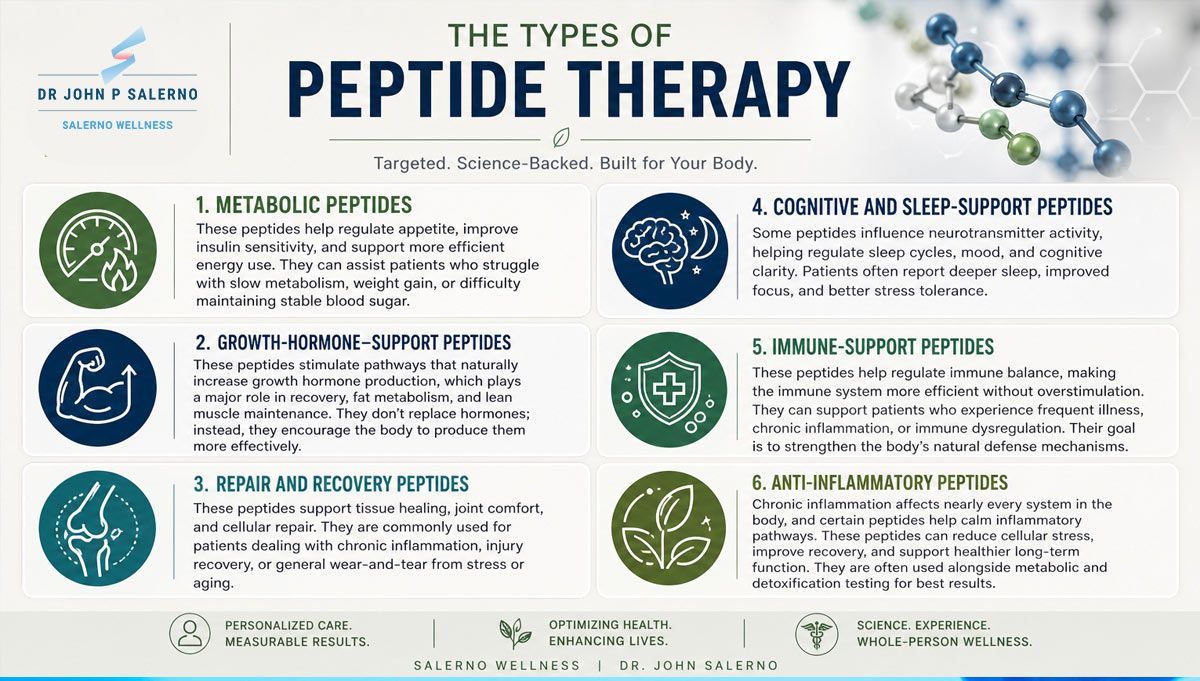
- Clinical Peptide Therapy - Peptides help spark cellular healing throughout the body and support metabolic function and resilience. Energy improves, blood sugar evens out, and healing accelerates when these pathways fire on all cylinders.
- IV Nutrient Therapy - Ultra‑processed foods are stripped of the vitamins, minerals, and antioxidants your body needs to help rebuild. IV therapy allows us to restore optimal levels of vitamins, minerals, and antioxidants by delivering nutrients directly into your bloodstream, bypassing the gut entirely. Most patients report feeling clearer, more energized, and more resilient.
- Hormone Optimization - Decades of food additives, artificial sweeteners, and systemic inflammation can take a toll on your endocrine system. Balancing hormones can help restore even metabolism, mood, sleep, and vitality. Over time, these pathways start working properly again.
Diet is obviously a big piece of the puzzle. Our patients learn how to stop eating ultra‑processed foods and start eating whole foods that fight inflammation. We focus on eating patterns that patients can actually stick with in the long term. This isn't rocket science or complicated macro counting—just simple meals made with real ingredients. After a while, patients experience less inflammation, better blood sugar balance, and feel downright amazing.
We're not looking for perfection. Our goal is to help you take manageable, sustainable steps toward eating in a way your body can actually understand. Each time you reduce your consumption of ultra‑processed foods—even by a small amount—your metabolism, hormones, and gut function will improve. Slow and steady wins this race. With support and guidance, you can begin to feel like yourself again and reach a new, sustainable level of health.
Let's Take the First Step Toward Eating What Your Body Was Built For
If you've been having problems with energy, metabolism, or digestion, we don't want you to figure it out alone. Let's sit down together, review what's going on, and create a tangible plan to support you. When you're ready, shoot us a message, and we'll schedule a time to chat.