Are We Aging Too Fast? What Longevity Medicine Reveals About Your Healthspan

Public awareness around age management has grown rapidly as more people recognize that aging is influenced by biology, lifestyle, and long‑term metabolic patterns. Many individuals begin thinking about longevity in their late 30s and 40s, when early shifts in energy, sleep, metabolism, or recovery become noticeable.
Research shows that age‑related changes often begin decades before symptoms become disruptive, which is why early understanding matters. Studies suggest there are two key transition periods in adult life—around ages 40 and 60—when the body’s cellular repair systems, metabolic efficiency, and hormonal balance begin to shift in measurable ways.
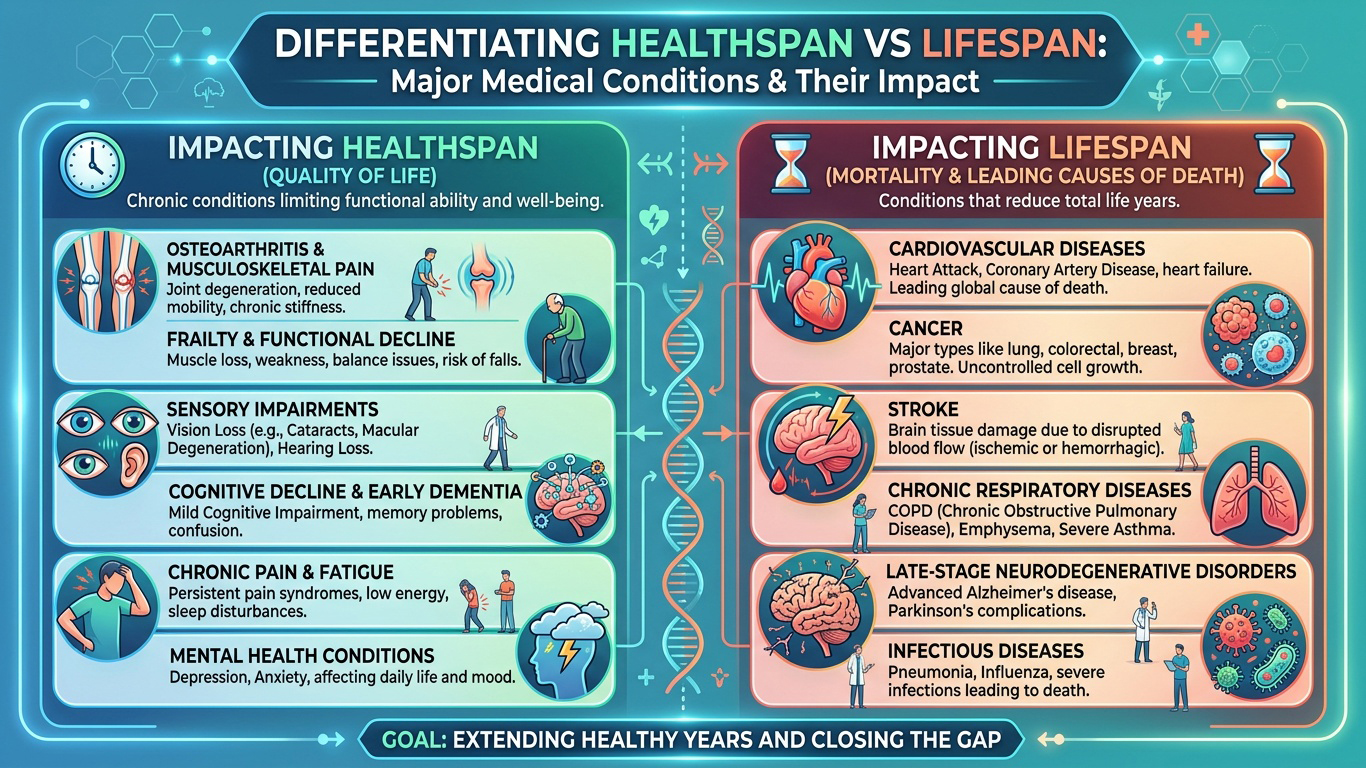
These changes reflect a gradual slowing of biological maintenance processes rather than a sudden decline. Conditions such as metabolic slowdown, hormonal fluctuations, chronic inflammation, and cognitive changes can often be moderated when identified early.
As one of the country's leading practitioners in Longevity Medicine, I focus on measuring these patterns with my patients, rather than waiting for disease to appear. This week, let's give some thought to how we can maintain strength, clarity, and resilience for as many years as possible.
-Dr. John Salerno
What Longevity Medicine Studies
Longevity medicine examines how the body ages at the cellular, metabolic, hormonal, and cardiovascular levels. It uses advanced diagnostics to identify early patterns that contribute to long‑term health outcomes. This includes evaluating biological age, mitochondrial efficiency, inflammation markers, hormone balance, nutrient status, cardiovascular risk factors, and environmental exposures. The emphasis is on understanding how these systems interact over time rather than treating isolated symptoms.
Why People Explore Longevity Medicine
People often become curious about longevity when they notice gradual changes that don’t match their lifestyle or habits. These may include slower recovery, reduced stamina, changes in body composition, or shifts in cognitive clarity. Others explore longevity medicine to understand their long‑term risk profile or to maintain performance in demanding personal or professional environments. The approach is not about reversing aging but about identifying modifiable factors that influence how someone feels and functions over time.
What the Research Suggests About Healthspan
How Longevity Evaluations Work
A longevity evaluation typically includes a detailed review of symptoms, history, lifestyle, and goals, followed by advanced testing. These tests may include biological age assessments, metabolic panels, hormone mapping, cardiovascular evaluations, toxicity screening, nutritional analysis, sleep studies, and pulmonary function testing. Once results are available, they are interpreted to identify patterns that may influence long‑term health. The findings help create a clearer picture of how the body is aging beneath the surface.
Scientific Areas Commonly Included in Longevity Care
Longevity medicine examines how different biological systems change over time and how these shifts influence long‑term health. To understand these patterns, clinicians and researchers study several core scientific areas that reveal how the body maintains, repairs, and regulates itself as it ages.
These areas provide a clearer picture of the mechanisms that support resilience, energy, cognition, and metabolic stability throughout adulthood. The following categories represent the foundational components most commonly evaluated in longevity‑focused care.
- Cellular repair and signaling — including research on peptides and how they influence cellular communication.
- Metabolic efficiency — examining insulin sensitivity, mitochondrial function, and nutrient utilization.
- Hormonal balance — understanding how shifts in hormones affect energy, sleep, cognition, and body composition.
- Nutrient status — identifying deficiencies that influence long‑term health.
- Inflammation and oxidative stress — evaluating markers that contribute to accelerated aging.
- Cardiovascular risk — assessing early indicators long before symptoms appear.
Together, these scientific domains help build a more complete understanding of how the body adapts, compensates, and changes across the lifespan. By examining these patterns early and consistently, individuals and clinicians can better recognize trends that may influence long‑term health outcomes. This approach supports a clearer, more informed view of aging—one grounded in measurable biology rather than assumptions or symptoms alone.
How Salerno Wellness Modalities Fit Into the Science of Longevity Medicine
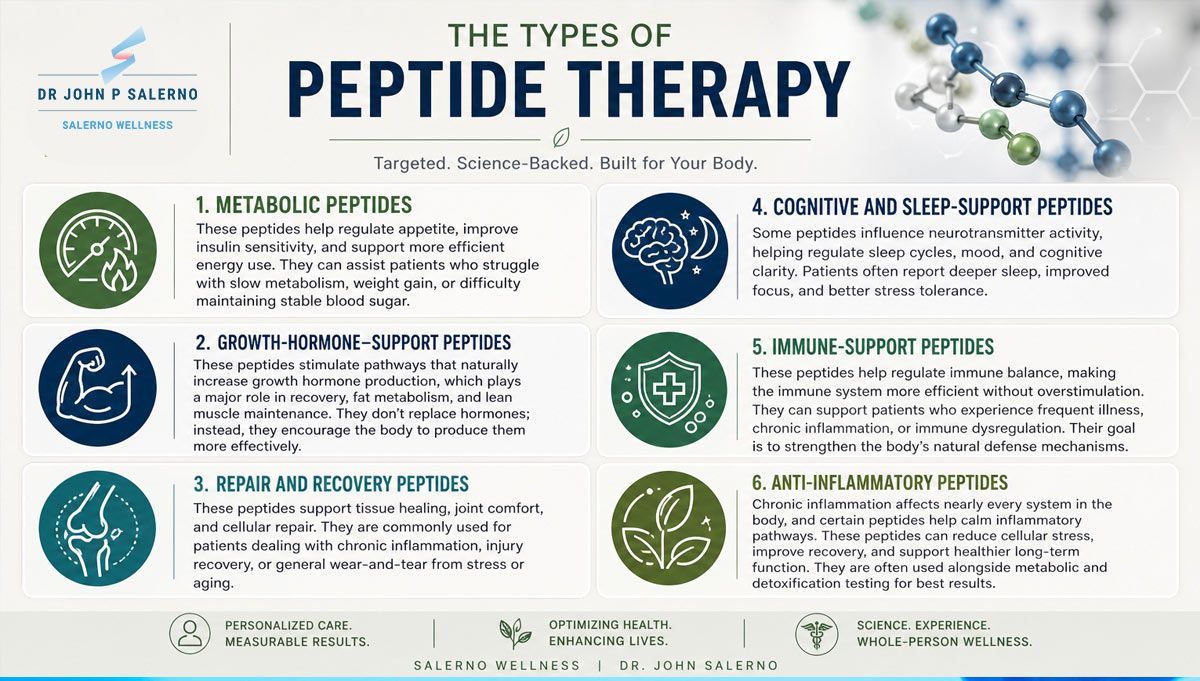
- Clinical Peptide Therapy - Peptides are short chains of amino acids that act as signaling molecules in the body. Research explores how certain peptides may support cellular repair, metabolic balance, immune function, and cognitive processes. Their role in longevity medicine is based on their influence on communication between cells and systems.
- IV Nutrient Therapy - IV therapy delivers nutrients directly into the bloodstream, bypassing the digestive system. In longevity research, IV nutrients are studied for their potential effects on mitochondrial function, detoxification pathways, and oxidative stress.
- Hormone Optimization - Hormones influence metabolism, sleep, cognition, and physical resilience. Longevity medicine examines how age‑related hormonal shifts affect long‑term health and how restoring balance may support overall function.
- Advanced Testing - Testing provides a detailed view of biological age, metabolic patterns, cardiovascular markers, and cellular stress. This data helps identify trends that may influence long‑term health outcomes.
Longevity medicine continues to evolve as research uncovers how the body ages and which biological patterns can be measured, supported, or modified over time. Its purpose is to offer clarity rather than urgency, giving individuals a deeper understanding of the systems that influence long‑term health.
As one of the country’s leading practitioners in longevity and age‑management medicine, Dr. Salerno encourages patients to stay informed about the science shaping modern approaches to healthy aging. Exploring these concepts helps people make thoughtful, evidence‑based decisions about how they want to feel and function in the decades ahead.
For those interested in learning more about Age Management, this field provides a grounded, research‑driven framework for understanding how biology, lifestyle, and environment work together to shape healthspan. Dr. Salerno empowers patients to take control of their aging process—starting now, not years from now.
Please contact us online or call us at (212) 582-1700 in New York City or (475) 269-2138 in Connecticut to schedule an appointment.