The Real Reasons for Hair Loss No One Talks About

Hair loss is one of the most common concerns I see in my practice, and yet it's also one of the most misunderstood. Patients often come in feeling frustrated, confused, or even embarrassed, because they've been told it's "just aging" or "just genetics."
-Dr. John Salerno
The Case for Medical Hair Loss Treatments
Imagine if the human body gave off a bright red glow every time a hormone shifted out of balance. It would be obvious when something needed attention, and patients would know exactly when to act. While we don't get a bright red warning light, thinning hair is just as clear a signal that the body is trying to communicate an internal imbalance.
What many people don't realize is that hair loss affects women more often than men, largely because women experience more frequent hormonal shifts throughout life — pregnancy, perimenopause, menopause, thyroid changes — all of which directly influence the hair growth cycle.
Men tend to lose their hair because their follicles are more sensitive to DHT, the hormone that gradually shrinks follicles over time. This sensitivity causes the growth phase to shorten with each cycle, leading to visible thinning earlier in life.
This week, let's imagine hair loss as a glowing, bright red warning light. If you look around at the people you interact with each day, you'll notice just how common internal imbalance really is. Once we recognize hair loss as a clear signal from the body, we can focus on understanding the cause and correcting it medically.
Hair loss affects confidence, identity, and overall well‑being, but most people never learn what's actually causing it. At Salerno Wellness, we take a root‑cause approach that looks beyond surface symptoms to the internal imbalances that quietly disrupt the hair growth cycle. When you understand the real reason behind thinning or shedding, treatment becomes far more effective and predictable.
Why Hair Loss Happens
Hair loss is rarely random. It's usually the result of overlapping internal factors that influence hair growth, shedding, and regeneration. Hormonal changes, nutrient deficiencies, thyroid issues, and chronic stress all contribute to weakening hair follicles over time. Many patients also experience hair loss related to autoimmune activity or inflammation, which can interrupt the normal growth cycle. Identifying the specific cause is the first step toward meaningful improvement.
Key Blood Tests That Reveal the Root Cause
Understanding what's happening inside the body is essential before choosing any treatment. These targeted tests help identify the most common internal imbalances that contribute to hair loss.
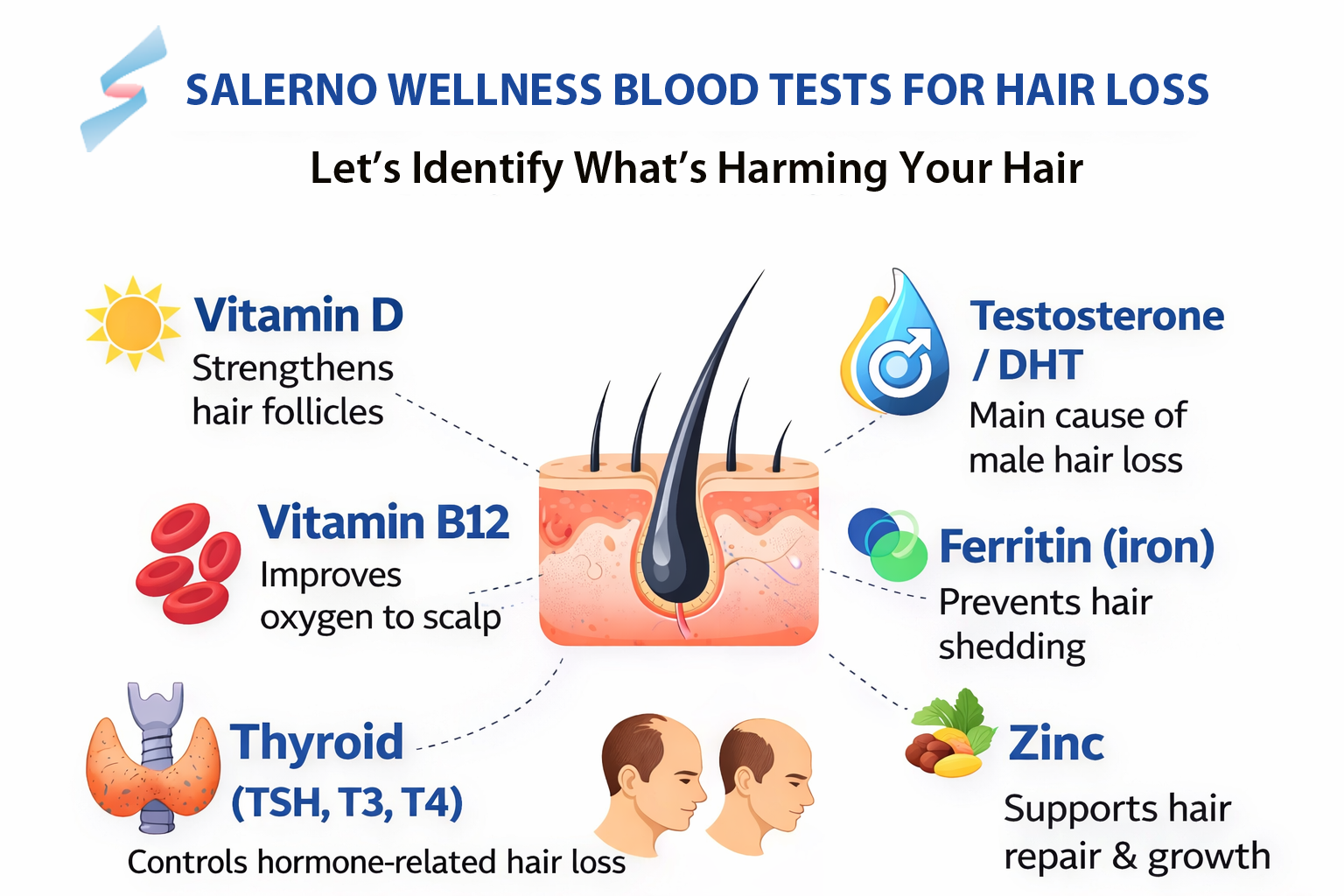
Before beginning treatment, it's important to evaluate the internal markers that influence hair growth. These tests help determine whether hormones, nutrients, or thyroid function are contributing to thinning or shedding. With this information, treatment becomes more precise and significantly more effective.
- Vitamin D — This nutrient supports healthy hair follicle activity and helps regulate the growth cycle. Low levels are extremely common and often contribute to increased shedding. Restoring optimal levels can help stabilize hair loss and improve density over time.
- Ferritin (Iron Stores) — Ferritin reflects how much iron your body has available for essential functions, including hair growth. Low ferritin levels are among the most overlooked causes of diffuse shedding, especially in women. Correcting iron deficiency can dramatically reduce hair fall.
- Vitamin B12 — B12 supports oxygen delivery to the scalp and hair roots, which is essential for strong, healthy growth. Deficiency can lead to thinning, fatigue, and poor hair quality. Testing ensures supplementation is targeted and appropriate.
- Thyroid Panel (TSH, T3, T4) — Thyroid hormones directly influence the speed and quality of hair growth. Both underactive and overactive thyroid function can cause shedding, dryness, and thinning. A full panel helps identify subtle imbalances that standard tests may miss.
- Testosterone and DHT — Elevated DHT is a major driver of pattern hair loss in both men and women. Testing these levels helps determine whether hormonal therapy or DHT‑modulating treatments may be beneficial. Identifying this early can prevent long‑term follicle miniaturization.
- Zinc — Zinc supports tissue repair and healthy follicle function. Low levels can weaken the hair shaft and slow regrowth. Testing ensures supplementation is used only when needed and at the correct dosage.
These tests we do at Salerno Wellness provide a clear picture of what's driving your hair loss and enable a personalized treatment plan rather than trial‑and‑error approaches.
Types of Hair Loss
Different patterns of hair loss require different treatment strategies. Androgenetic alopecia typically presents with gradual thinning and is influenced by hormones such as DHT. Telogen effluvium often appears as sudden shedding triggered by stress, illness, or nutrient deficiencies. Alopecia areata is an autoimmune‑related condition that causes patchy hair loss, while traction alopecia results from repeated pulling or tight hairstyles. Understanding the pattern helps determine the most effective path forward.
Advanced Treatments at Salerno Wellness
Salerno Wellness offers several evidence‑based treatments designed to address the root causes of hair loss and support long‑term regrowth. Platelet‑Rich Plasma (PRP) therapy uses your own concentrated growth factors to stimulate dormant follicles, improve circulation, and strengthen existing hair. This treatment is especially effective when combined with internal optimization.
Hormone optimization is another powerful tool for patients whose hair loss is driven by thyroid imbalance, elevated DHT, or shifts in estrogen or progesterone. By restoring hormonal balance, the hair cycle becomes more stable and responsive to treatment. Nutrient correction, peptide therapy, and targeted supplementation further support the regrowth process.
What You Can Do Right Now
Improving hair health begins with identifying and correcting internal imbalances. A nutrient‑dense diet, adequate protein intake, and healthy fats support the hair growth cycle. Managing stress helps prevent prolonged shedding phases, while medical treatments like PRP and hormone therapy can accelerate regrowth. Patience is essential, as visible improvements typically take 3 to 6 months.
Take Control of Your Hair Health
Hair loss is your body signaling an imbalance, not something you need to accept. With proper testing, targeted treatment, and advanced therapies like PRP and hormone optimization, you can restore healthier, fuller hair. Salerno Wellness is here to help you understand the cause and take meaningful steps toward long‑term improvement.