Chronic Inflammation: Why So Many People Feel Sick — Even When Their Labs Look "Normal"

Let's learn more about this overwhelmingly prevalent medical condition that no one talks about or addresses, and that has a profound impact on your longevity.
-Dr. John Salerno
Why Ignoring Early Inflammation Signs Can Lead to Disease — And How Functional Medicine's Root‑Cause Approach Restores and Protects Your Health
When was the last time you went to the doctor because of inflammation? Probably never.
The medical community will acknowledge that about 60% of all deaths are linked to chronic inflammatory diseases, which include heart disease, stroke, diabetes, cancer, chronic respiratory diseases, and autoimmune conditions. Functional medicine doctors like myself say it's much higher.
- Chronic Inflammation is often the root cause, even when it's not listed as the official cause of death.
- Diseases like Alzheimer's, obesity, depression, and metabolic syndrome, which are all inflammation‑driven, are rising rapidly.
- Chronic inflammation is frequently undiagnosed or misclassified.
With these additional considerations, it's actually pretty hard to die without having inflammation! 8 of my last 11 patients who came in for a holistic physical just because they weren't feeling well had chronic inflammation, which needed treatment. Thankfully, we have the opportunity to minimize its long-term effect on our bodies.
Why So Many People Feel Sick — Even When Their Labs Look "Normal"
Inflammation is one of the body's most fundamental protective mechanisms. When you cut yourself, twist an ankle, or come down with a virus, your immune system launches a short‑term inflammatory response designed to repair damage and eliminate threats. This acute inflammation is essential—it's how the body heals.
Chronic inflammation, however, is an entirely different phenomenon. Instead of shutting down once the danger has passed, the immune system stays switched on, operating in a constant state of overdrive. Over time, this persistent inflammatory activity begins to damage healthy tissues, disrupt normal physiology, and quietly undermine long‑term health.
It can smolder beneath the surface for years, fueled by poor nutrition, environmental toxins, chronic stress, unresolved infections, hormonal imbalances, or metabolic dysfunction. Unlike acute inflammation, which is obvious and often painful, chronic inflammation is subtle and deceptive. Many people don't realize it's there until more serious symptoms—or even disease—emerge.
Common Symptoms of Chronic Inflammation
Chronic inflammation doesn't look the same in every patient, which is why it's so often missed. Some individuals experience ongoing joint pain or muscle aches that never fully resolve. Others battle relentless fatigue that sleep doesn't fix. Digestive issues—bloating, constipation, and diarrhea—often point to gut inflammation. Frequent infections may signal an immune system that's too overwhelmed to function correctly. Skin issues such as eczema, psoriasis, or unexplained rashes can also reflect internal inflammatory stress.
Many patients describe brain fog, mood fluctuations, or difficulty concentrating. This happens because inflammatory chemicals can cross the blood‑brain barrier and interfere with neurotransmitter balance. Weight gain, especially around the midsection, is another common sign, as inflammation disrupts metabolic hormones, making fat loss more challenging.
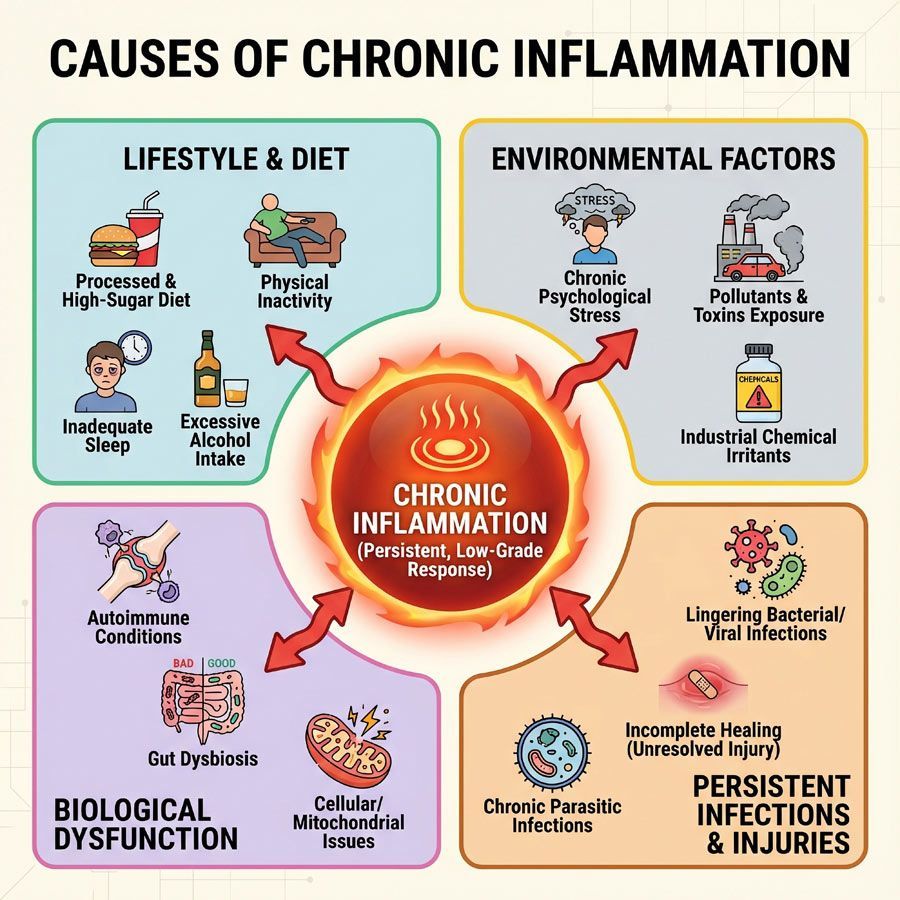
The triggers behind chronic inflammation are just as varied. Diets high in processed foods, sugar, and unhealthy fats are major contributors. Environmental toxins—from mold to heavy metals—can keep the immune system in a constant state of vigilance. Chronic stress elevates cortisol levels, destabilizing immune regulation. Poor sleep, sedentary habits, hidden infections, and imbalances in the gut microbiome all add to the burden. Often, several of these factors overlap, creating a cumulative load that the body can no longer compensate for.
Why You Should Never Ignore the Signs
One of the biggest mistakes patients make is dismissing early symptoms as "normal" or "just stress." Fatigue, mild pain, digestive discomfort—these may seem insignificant, but they are often the body's first warning signals. Chronic inflammation rarely resolves on its own. Left unchecked, it becomes a driving force behind disease.
I often tell patients that chronic inflammation is like a slow leak in your roof. You may not see the damage right away, but over time, it can compromise the entire structure. The sooner we identify and address it, the better the outcomes. Waiting until symptoms escalate usually means the underlying issues have become more complex and require deeper intervention.
The Long‑Term Health Risks of Chronic Inflammation
The consequences of chronic inflammation are far‑reaching.
- Cardiovascular disease is one of the most well‑documented outcomes, as inflammation damages blood vessels and accelerates plaque formation.
- Type 2 diabetes and insulin resistance are closely linked to inflammation that interferes with insulin signaling.
- Autoimmune Diseases - Rheumatoid Arthritis, Lupus, Hashimoto's Thyroiditis are rooted in an immune system that has lost its ability to distinguish self from non‑self.
- In the brain, chronic inflammation contributes to neurodegenerative disorders such as Alzheimer's Disease by promoting the buildup of harmful plaques and tangles.
- Even cancer has strong inflammatory links, as inflamed tissues create an environment where abnormal cells can grow more easily. Respiratory conditions like COPD also worsen when inflammation narrows and damages the airways.
In short, chronic inflammation is not merely a symptom—it is a foundational driver of many of today's most serious health challenges.
How Dr. John Salerno Treats Inflammation Differently
This is precisely why my approach at Salerno Wellness differs so dramatically from conventional medicine. Traditional care often focuses on suppressing symptoms with anti‑inflammatory drugs for joint pain, acid blockers for digestive issues, and reassurance when labs appear "normal." While these interventions may offer temporary relief, they rarely address the underlying causes that keep inflammation active.
My focus is on identifying and removing the root triggers so the body can restore balance and heal. This begins with a comprehensive evaluation that goes far beyond standard blood work. I assess inflammatory markers, nutrient status, hormonal balance, toxic exposures, gut health, and hidden infections. I also take the time to understand each patient's lifestyle—stress, sleep, diet, movement—because a single factor rarely causes chronic inflammation.
Once we uncover the triggers, we use a combination of integrative and functional therapies to calm the immune system and support proper healing. This may include targeted nutrition, detoxification protocols, bioidentical hormone optimization, IV nutrient therapy, gut‑healing strategies, and personalized supplementation. Rather than suppressing the immune system, we retrain and support it. The goal is not just symptom relief—it's restoring energy, clarity, and long‑term vitality.
A Path Toward Healing
For many patients, this approach is transformative. They finally feel heard, understood, and supported. They discover that inflammation is not a life sentence—it's a message. When we correctly interpret that message and address its root causes, profound healing becomes possible.
Chronic inflammation may be silent, but its impact is not. By recognizing the early signs, addressing the underlying triggers, and embracing a comprehensive, integrative approach, you can reclaim your health and prevent the long‑term consequences that so many people face unnecessarily.